50% of occupations today will no longer exist in 2025: Report
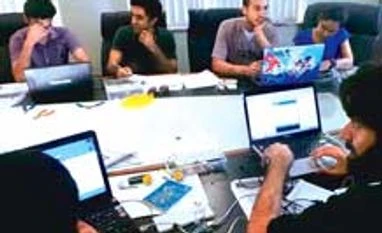
Workspaces with row of desks will become completely redundant, not because they are not fit for purpose, but simply because that purpose no longer exists, the report predicts
Press Trust of India Mumbai A paradigm shift is expected to be witnessed in the way workplaces operate over the next 15 years, making nearly 50 per cent of occupations existing today redundant by 2025, a report has said.
Artificial intelligence will transform businesses and the work that people do. Process work, customer work and vast swathes of middle management will simply disappear, it said.
The report titled 'Fast Forward 2030: The Future of Work and the Workplace' has been prepared by realty consulting firm CBRE and China-based Genesis, a property developer, after interviewing 220 experts, business leaders and young people from Asia, Europe and North America.
"Nearly 50 per cent of occupations today will no longer exist in 2025. New jobs will require creative intelligence, social and emotional intelligence and ability to leverage artificial intelligence. Those jobs will be immensely more fulfilling than today's jobs," the report said.
Workspaces with row of desks will become completely redundant, not because they are not fit for purpose, but simply because that purpose no longer exists, it said.
"The next 15 years will see a revolution in how we work, and a corresponding revolution will necessarily take place on how we plan and think about workplaces.
"The dramatic changes in how people work that we have seen in the past two decades will continue to evolve over the next 15 years, opening up new opportunities for companies to create value and enhance employee performance through innovative workplace strategies and designs," CBRE South Asia Chairman and Managing Director Anshuman Magazine said.
He said many of these opportunities have in fact already arrived, and by seizing them early, smart companies can gain a competitive advantage.
By 2030, a majority of real estate transactions may be made online. And most of them will be made using real time marketplaces, the report noted.
"Real estate traditionally changes slowly but these new emerging aggregators could revolutionise the market, allowing tenants and many types of building owners in cities to contribute wasted and unused space back into an eco-system of available space," Magazine said.
Given the coming dramatic changes, companies will need to re-learn how to obtain high performance from employees and contractors, CBRE Asia Pacific Director of Workplace Strategy Peter Andrew opined.

 "50% of occupations today will no longer exist in 2025: Report")

