Flat income tax system undesirable, say industry and trade officials
a system prescribing higher rate of income tax for a higher income group helps garner revenue without becoming burdensome on lower income taxpayers
Press Trust of India Hyderabad As the taskforce to draft a new direct tax law gets cracking, industry and trade officials say a flat rate income tax system is undesirable for a country like India with wide income inequality.
The new law is to replace the existing Income Tax Act, 1961.
"A flat rate is not progressive in an unequal society," Ficci Secretary General Sanjaya Baru told PTI, when asked about suggestions in some quarters for a flat income tax framework as is prevalent in countries like Russia.
The current income tax slabs in India compare favourably with most democracies where the government is expected to invest in social welfare and infrastructure, he said.
According to Assocham National Council Chairman Rahul Garg, progressive rates of income tax are desirable to attain the objective of fairness in the income tax system.
Given the revenue resource requirements of the country, Garg said a very low rate of income tax is not immediately feasible. And it would be unfair to levy a relatively high rate of income tax on all income groups, he maintained.
Hence, a system prescribing higher rate of income tax for a higher income group helps garner revenue without becoming burdensome on lower income taxpayers, Garg explained.
Infosys' former chief financial officer V Balakrishnan observed that for a developing country like India, which is in lower middle income bracket, a flat tax structure may not be an equitable one. Income inequality in India is one of the highest, with 22 per cent of the national income going to top 1 per cent.
"This is one of the highest since the creation of the Income Tax Act... as per a research paper published by renowned economist Thomas Piketty," he said.
India's current tax system, according to Balakrishnan, is progressive in nature, with tax rates going up when the income level goes up.
"Only with a progressive tax system, such wide income inequalities can be addressed. I believe that a flat tax system will be regressive, considering India's current situation," he pointed out.
He spoke of the "great success" of the Russian model of the flat tax system, but "it is not just that which created the miracle". The reforms in Russia were accompanied by several changes -- in both the structure and the administration of taxes.
"The reforms widened the tax base by eliminating many exemptions and deductions as well as increasing taxes on several capital income," Balakrishnan further said.
He touched on how the administrative reforms focussed on plugging loopholes and improving tax collections in Russia, where the enforcement resulted in an increased atmosphere of tighter control and even coercion in some cases.
"I think it is too premature for India to try the flat income tax system," Balakrishnan cautioned.
After overhauling the indirect taxes, the government last week formed the task force with Arbind Modi, Member (Legislation), Central Board of Direct Taxes, as the convener, to draft the law to meet contemporary economic requirements of the country.

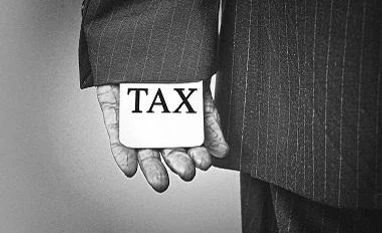 "Flat income tax system undesirable, say industry and trade officials")


 Connect with us on WhatsApp