
India issues details of projects to stop flow of its share of water to Pak
The Water Resources Ministry on Friday issued a statement giving details of the projects being implemented to stop the flow of waters that belong to India
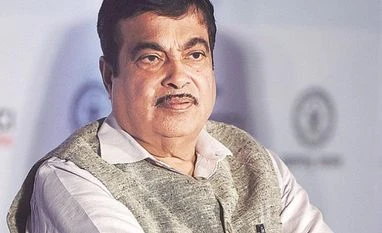 "India issues details of projects to stop flow of its share of water to Pak")
Explore Business Standard
The Water Resources Ministry on Friday issued a statement giving details of the projects being implemented to stop the flow of waters that belong to India
A day after Union minister Nitin Gadkari said India had decided to "stop" the flow of its share of river water to Pakistan under the Indus Water Treaty, the Water Resources Ministry on Friday issued details of various projects being worked upon to enforce it.
"Under the leadership of Hon'ble PM Sri @narendramodi ji, Our Govt. has decided to stop our share of water which used to flow to Pakistan. We will divert water from Eastern rivers and supply it to our people in Jammu and Kashmir and Punjab (sic)," Gadkari had tweeted on Thursday.
However, additional director general of media and communications in the ministry Neeta Prasad later clarified that it was not a "new decision" and that the water resources minister was "simply reiterating" what he had always said.
The Water Resources Ministry on Friday issued a statement giving details of the projects being implemented to stop the flow of waters that belong to India.
Asked what prompted the ministry to issue the statement, a source said the minister's tweet prompted the ministry to give details of the projects being worked upon.
The Indus system comprises Indus river, Jhelum, Chenab, Ravi, Beas and Sutlej. The basin is mainly shared by India and Pakistan with a small share for China and Afghanistan, the ministry said in the statement.
Under the Indus Water Treaty signed between India and Pakistan in 1960, all the waters of the three rivers, namely Ravi, Sutlej and Beas (eastern Rivers) averaging around 33 million acre feet (MAF) were allocated to India for exclusive use.
The waters of western rivers -- Indus, Jhelum, and Chenab averaging to around 135 MAF were allocated to Pakistan except for specified domestic, non-consumptive and agricultural use permitted to India as provided in the treaty.
India has constructed the Bhakra Dam on Sutlej, Pong and Pandoh Dam on Beas and Thein (Ranjitsagar) on Ravi. These storage works, together with other works like Beas-Sutlej link, Madhopur-Beas link, Indira Gandhi Nahar Project etc. has helped India utilise nearly entire share (95 %) of waters of the eastern rivers.
However, about 2 MAF of water annually from Ravi is reported to be still flowing unutilised to Pakistan below Madhopur.
The ministry also listed the projects being worked on to stop the flow of the waters that belong to India for its utilisation in the country.
Among the projects is the Shahpurkandi project that will help in utilising the waters coming out from powerhouse of Thein dam to irrigate 37,000 hectares of land in Jammu and Kashmir (J&K) and Punjab, and generate 206 MW of power, the statement said.
"The project was scheduled to be completed by September 2016. However, following a dispute between the states of J&K and Punjab, the work on the project had been suspended since August 30, 2014.
After an agreement reached on September 8, 2018, between J&K and Punjab, the construction work has now been resumed by the Punjab government, under the central government's monitoring.
Another project aimed at restricting the flow of the waters belonging to India is the Ujh multipurpose project that will create a storage of about 781 million cubic metre of water on river Ujh , a tributary of Ravi, for irrigation and power generation in India, the statement said.
The Detailed Project Report of the venture has been technically approved for the total estimated cost of Rs 5,850 crore in July, 2017. This project is a national project and the central assistance of Rs 4,892.47 crore on works portion of irrigation component as well as the special grant is under consideration, the statement said.
"The implementation of the project will take 6 years from beginning of the implementation," the statement said.
The third project aimed at stopping the flow of the waters that belong to India is the second Ravi-Beas link below Ujh, it said.
This project is being planned to tap excess water flowing down to Pakistan through river Ravi, even after construction of Thein Dam, by constructing a barrage across river Ravi for diverting water through a tunnel link to Beas basin.
"The three projects will help India to utilise its entire share of waters given under the Indus Water Treaty 1960," the ministry said.
First Published: Feb 22 2019 | 3:25 PM IST

