Israel PM: no deal unless Palestinians accept Jewish state
These are basic conditions, which are justified and vital to the security of Israel, says Netanyahu
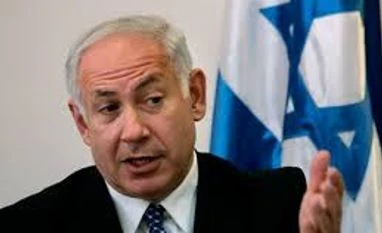
AFP Jerusalem Prime Minister Benjamin Netanyahu today ruled out any deal with the Palestinians unless they recognise Israel as the Jewish state and give up their refugees' right of return.
And he said Israel and the Palestinians were getting further away from reaching a peace deal which would end the decades-long conflict, with US-led peace talks bogged down in a bitter dispute on the question of Israel as a Jewish state.
"They (Palestinians) say they will never recognise a Jewish state and that they will never give up on the right of return," Netanyahu said in remarks on Israeli public radio.
"I want to make clear that I will not accept an agreement that does not cancel the (refugees') right of return and which does not include Palestinian recognition of the Jewish state," he said addressing the ruling rightwing Likud-Beitenu faction.
"These are basic conditions, which are justified and vital to the security of Israel."
Netanyahu's remarks touched on one of the most thorny questions of the current talks, and one which looks likely to derail intensive US efforts to extend the negotiations beyond a looming April deadline.
The Palestinians have refused to recognise Israel as the Jewish state, saying this would deny their historical narrative and effectively cancel out the right of their refugees to return to homes they fled from or were forced out of during the 1948 war which accompanied Israel's creation.
Last week, in Washington, Netanyahu publicly called on Palestinian president Mahmud Abbas to accept the Jewish state.
The Palestinians denounced the call as effectively putting the final nail in the coffin of the peace talks.
US Secretary of State John Kerry is facing an uphill struggle to get the two sides to agree on a framework which would guide the talks past an April 29 deadline and allow them to continue to the end of the year, and that includes a clause relating to the issue of the Jewish state.
But the Palestinians have flatly refused the request, prompting Netanyahu to accuse them of blocking negotiations.
"The Palestinians are not showing any signs they are getting close to entering into a practical and justified agreement," he said.
Netanyahu insists that only when the Palestinians acknowledge Israel as the homeland of the Jewish nation will the conflict be finally over.
This demand has only recently come to prominence, taking centre stage in the dispute between the sides.
For the Palestinians, the issue is intimately entwined with the fate of their refugees who were forced out of their homes or fled in 1948 when Israel became a state.
At the time they numbered 760,000, but now, with their descendants, their numbers have swollen to around five million.

 "Israel PM: no deal unless Palestinians accept Jewish state")

