Home / India News / J&K Reorganisation Act, 2019 finds a place in J&K class-10 textbooks
J&K Reorganisation Act, 2019 finds a place in J&K class-10 textbooks
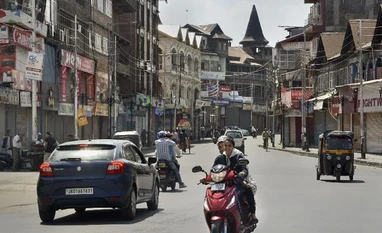
The Centre's announcement proceeded strict curbs across Jammu and Kashmir to maintain law and order. The restrictions were, however, eased out in a phased manner to a large extent as the time passed.
The act came into effect on October 31 last year and reconstituted the erstwhile state into two UTs while placing the region under the direct control and supervision of Central government.
The Jammu and Kashmir Board of School Education (JKBOSE) has introduced a chapter on J&K Reorganisation Act, 2019 in the political science textbooks for class 10, an official said on Saturday.
The book (Social Science Democratic Politics-II) concludes with an Addendum on the Jammu and Kashmir Reorganisation Act, 2019 under chapter eight of Unit IV.
The centre had on August 5 last year revoked provisions of Article 370 which guaranteed special status to Jammu and Kashmir and bifurcated the erstwhile state into two Union Territories of Jammu and Kashmir, and Ladakh.
The Centre's announcement proceeded strict curbs across Jammu and Kashmir to maintain law and order. The restrictions were, however, eased out in a phased manner to a large extent as the time passed.
However, three former Chief Ministers -- National Conference president Farooq Abdullah, his son Omar Abdullah and the People's Democratic Party (PDP) president Mehbooba Mufti -- and scores of other leaders continue to be under detention, while the internet speed is still restricted to 2G.
The academic session for class 10 started across Kashmir and winter zones of Jammu region with the opening of schools in the last week of February. The examination for class 10 is underway in summer zone Jammu where the new session starts in April.
The particular chapter talks about the resolution passed in both houses of Parliament on August 5 last year followed by a Presidential order the next day declaring all the clauses of Article 370 except clause (1) to be inoperative. It effectively ended the special rights and privileges given to the permanent residents of Jammu and Kashmir and the restrictions on people from outside to buy immovable property or apply for jobs in the state government.
The act came into effect on October 31 last year and reconstituted the erstwhile state into two UTs while placing the region under the direct control and supervision of Central government.
The chapter also talks about instrument of Accession (IOA) that was executed by the then ruler of the princely state of Jammu and Kashmir Maharaja Hari Singh on October 26, 1947 and subsequent incorporation of Article 370 in the constitution conferring certain powers like separate constitution, state flag, autonomy over the internal administration.
It also briefly mentions Article 35-A which empowered the J&K state legislature to define the status of permanent residents of the state.
In the provisions of the Act, it speaks about the formation of UT of Ladakh without legislature, UT of Jammu and Kashmir with a legislative assembly having 107 seats, out of which 24 shall be reserved for residents of Pakistan-occupied Kashmir.
It also talks about reservation for scheduled castes, scheduled tribes, OBCs and others as per the central government's rules, and application of Central laws, common high court for both UTs and representation in parliament.

 "J&K Reorganisation Act, 2019 finds a place in J&K class-10 textbooks")

