Mexico City bans many cars in first smog alert in 11 years
In a rotating scheme, a different but equivalent set of cars will be told to stay off the streets on Thursday
APPTI Mexico City Authorities in greater Mexico City extended an air pollution alert for the fourth day, as smog levels improved slightly but pollution remained at almost 1.5 times acceptable limits in some areas.
The city's first air pollution alert in 11 years resulted in a driving ban that kept hundreds of thousands of cars from the roads yesterday. A metropolitan commission said that had helped, but hot, dry and windless conditions were expected to last through mid-day today.
In a rotating scheme, a different but equivalent set of cars will be told to stay off the streets on Thursday.
The city offered free subway and bus rides to coax people from their vehicles.
Officials advised people to limit outdoor activity due to high ozone levels that were nearly double the acceptable limits in the sprawling capital, which lies in a high-altitude valley ringed by smog-trapping volcanic mountains.
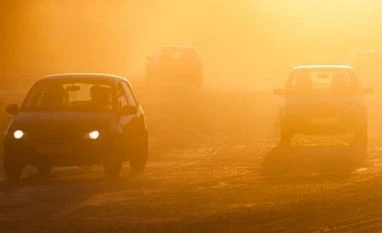
Amid a muddy brown haze, some residents covered their mouths with scarves or paper masks as they moved through the streets. Some schools kept kids indoors during recess.
Environment Secretary Alejandro Pacchiano said if conditions did not improve, further measures might be considered, such as suspending industrial activity at factories. By late Wednesday afternoon, pollution continued to be above acceptable limits.
Mayor Miguel Angel Mancera told Televisa news that about 1.1 million cars in the Valley of Mexico, including nearly 450,000 in the capital, were ordered off the streets under the restrictions. However, he later said that only about 800,000 had stayed off the road. He didn't explain the discrepancy, but suggested some motorists drove despite the ban.
According to the National Statistics Institute, about 4.7 million vehicles were registered in the capital in 2014, the most recent year for which figures are available.
Mexico City used to regularly reach high smog levels, but air quality has improved significantly since the 1990s. Among other measures, rules were put in place that aimed to limit the circulation of older, more polluting vehicles, and obliged car owners to get regular smog checks.
But a court relaxed those restrictions last year in a ruling that authorities and environmentalists blame for a rise in traffic. Pacchiano said that decision put an extra 1.4 million cars a day on the streets.
Ozone is a component of smog that can cause respiratory problems. Mexico City's last alert for ozone was in 2002, and the last pollution alert for air particles was in 2005. The current ozone alert was declared on Monday night.

 "Mexico City bans many cars in first smog alert in 11 years")


