Manufacturing sector grows gradually in 2014; more growth eyed in 2015
India's manufacturing PMI rose to 54.5 in December, 2014, while in the corresponding period a year ago it stood at 50.7
Press Trust of India New Delhi India's manufacturing sector witnessed a gradual but significant expansion during the year 2014 and ended on a higher note reaching two-year high in December, according to an HSBC survey.
This gradual expansion is expected to continue further this year as well, analysts believe.
India's manufacturing PMI rose to 54.5 in December, 2014, while in the corresponding period a year ago it stood at 50.7, just above the crucial 50 mark which separates growth from contraction.
Overall, the PMI data suggest a gradual expansion in the manufacturing sector and signal robust growth at Indian goods producers.
"Indian goods producers ended 2014 in a higher gear, with business conditions improving at the quickest pace in two years in December," HSBC said in a research note.
"Manufacturing activity momentum accelerated to a two-year high in December, led by a healthy increase in new orders from both at home and from abroad," Pranjul Bhandari, Chief India Economist at HSBC said.
Commenting on the PMI data, Japanese brokerage firm Nomura said overall, the PMI data suggest a gradual expansion in the manufacturing sector.
"We expect lower inflation, higher profit margins, easier financial conditions and increased government policy efforts aimed at de-bottlenecking to support a gradual pickup in the growth cycle in 2015," Sonal Varma, executive director - India economist at Nomura said.
On December 2013, HSBC's India manufacturing PMI fell but remained in expansionary territory. The slowdown was led mainly by a deceleration in domestic orders.
The factors that acted as a drag on the manufacturing sector in December 2013, include elevated and persistent inflation, tighter financial conditions and high leverage, and insufficient progress on structural reform implementation as well as slow execution of key investment projects.
However, by the end of the year some of these factors like inflation showed substantial easing and helped in a meaningful pickup in manufacturing output.
"In line with falling commodity prices over the last few months, input price inflation was modest, and this trend was also mirrored in output prices," Bhandari said, adding that with the dis-inflationary trend gaining ground, RBI is expected to "find space for some rate cuts in 2015".
RBI Governor Raghuram Rajan in the monetary policy review meet in December, 2014, had kept interest rate unchanged, saying that a shift in stance is 'premature' but hinted that a cut may come early next year if inflation continues to ease and government acts on the fiscal side.
Accordingly, the repo rate continues to be at 8% while the cash reserve ratio has also been retained at 4 %.

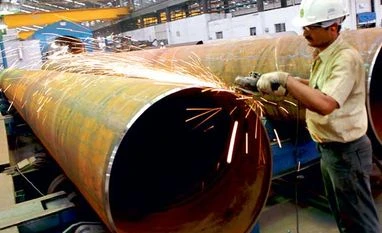 "Manufacturing sector grows gradually in 2014; more growth eyed in 2015")


 Connect with us on WhatsApp