Scientists have created a cheap and highly efficient biomaterial that catalyses the formation of hydrogen, an advance that may lead to new environmentally friendly ways of producing biofuel.
Researchers at Indiana University (IU) produced the material which is 150 times more efficient than the unaltered form of the enzyme, and gains strength from being protected within the protein shell - or 'capsid' - of a bacterial virus.
"Essentially, we have taken a virus's ability to self-assemble myriad genetic building blocks and incorporated a very fragile and sensitive enzyme with the remarkable property of taking in protons and spitting out hydrogen gas," said Trevor Douglas from IU, who led the study.
"The end result is a virus-like particle that behaves the same as a highly sophisticated material that catalyses the production of hydrogen," he added.
The genetic material used to create the enzyme, hydrogenase, is produced by two genes from the common bacteria Escherichia coli which is inserted inside the protective capsid.
The genes, hyaA and hyaB, are two genes in E coli that encode key subunits of the hydrogenase enzyme. The capsid comes from the bacterial virus known as bacteriophage P22.
The resulting biomaterial, called 'P22-Hyd,' is not only more efficient than the unaltered enzyme but also is produced through a simple fermentation process at room temperature.
The material is potentially far less expensive and more environment friendly to produce than other materials currently used to create fuel cells.
"You do not need to mine it; you can create it at room temperature on a massive scale using fermentation technology; it is biodegradable. It is a very green process to make a very high-end sustainable material," said Douglas.
P22-Hyd both breaks the chemical bonds of water to create hydrogen and also works in reverse to recombine hydrogen and oxygen to generate power.
"The reaction runs both ways - it can be used either as a hydrogen production catalyst or as a fuel cell catalyst," said Douglas.
The form of hydrogenase is one of three occurring in nature: di-iron (FeFe)-, iron-only (Fe-only)- and nickel-iron (NiFe)-hydrogenase.
The third form was selected for the new material due to its ability to easily integrate into biomaterials and tolerate exposure to oxygen.
NiFe-hydrogenase also gains significantly greater resistance upon encapsulation to breakdown from chemicals in the environment, and it retains the ability to catalyse at room temperature.
Unaltered NiFe-hydrogenase, by contrast, is highly susceptible to destruction from chemicals in the environment and breaks down at temperatures above room temperature - both of which make the unprotected enzyme a poor choice for use in manufacturing and commercial products such as cars.
The findings were published in the journal Nature Chemistry.

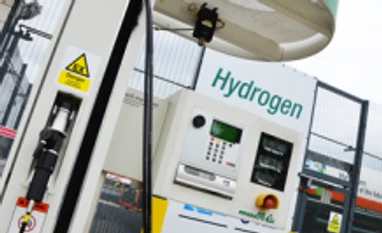 "Scientists create new 'nano-reactor' to produce hydrogen biofuel")


 Connect with us on WhatsApp