
Don't worry says Centre, dismissing reports of demonetising Rs 2,000 notes
According to the reply, notes in circulation (NIC) as on November 4, 2016 were Rs 17,741.87 billion which have now increased to Rs 22,356.48 billion as on December 2, 2019
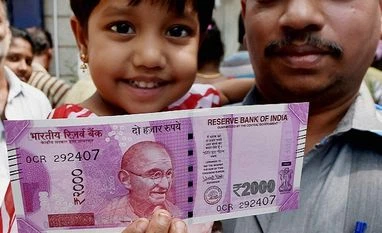 "Don't worry says Centre, dismissing reports of demonetising Rs 2,000 notes")
WebinarsNew
Deep DiveNew
Explore Business Standard
According to the reply, notes in circulation (NIC) as on November 4, 2016 were Rs 17,741.87 billion which have now increased to Rs 22,356.48 billion as on December 2, 2019
Dismissing reports that the government is set to withdraw Rs 2000 denomination note, Minister of State for Finance Anurag Thakur on Tuesday said there was no need to worry about it.
"This is the real worry (about demonetisation) which has surfaced now. I think that you should not worry about it," Thakur told Rajya Sabha replying to a question on government's plan to withdraw Rs 2000 note in the future.
SP member Vishambhar Prasad Nishad said, "Blackmoney has increased by introduction of Rs 2000 denomination note. There is misconception among people that you are going to introduce Rs 1000 denomination note again to replace Rs 2000 denomination note."
The government had in November 2016 demonetised Rs 1,000 and Rs 500 denominations notes.
Thakur told the House that objectives of demonetisation were flushing out black money, eliminating Fake Indian Currency, to strike at the root of financing of terrorism and Left-wing extremism, to convert non-formal economy to a formal economy to expand tax base and employment and to give a big boost to digitalisation of payments to make India a less cash economy.
According to the reply, notes in circulation (NIC) as on November 4, 2016 were Rs 17,741.87 billion which have now increased to Rs 22,356.48 billion as on December 2, 2019.
The NIC had grown at an average growth rate of 14.51 per cent year on year wise since October 2014 till October 2016.
At this rate, NIC would have increased to Rs 25,402.53 billion as on December 2, 2019.
As actual NIC on November 25, 2019 is only Rs 22,356.48 billion, demonetisation followed by digitalisation and reduction of cash use in informal economy has succeeded in reducing NIC by as much as Rs 3046.05 billion, it added.
As reported by the RBI, 762,072 pieces of counterfeit bank notes were detected in the banking system during 2016-17, 522,783 pieces in 2017-18 and 317,389 pieces in 2018-19. Hence, demonetisation resulted in curbing of counterfeit currency, the minister said in the reply tabled in the House.
Digital payment transactions have been steadily increasing since last few years. The total transaction volume increased from 2071 crore in 2017-18 to 3134 crore for 2018- 19, which corresponds to a growth rate of 51 per cent.
The overall economic growth of a country is dependent on several factors including structural, external, fiscal and monetary and thus it is difficult to pinpoint the impact of any one particular factor on the growth rate of GDP, said the minister about impact of demonetisation on economic growth.
Moodys has not downgraded rating of India after 2016, he added in the tabled reply.
First Published: Dec 10 2019 | 3:41 PM IST

