North Korea set to face UN censure over human rights
United Nations votes today on a draft resolution deploring widespread abuses in the deeply reclusive country
AFP United Nations North Korea could face its strongest condemnation to date of its human rights record when the United Nations votes today on a draft resolution deploring widespread abuses in the deeply reclusive country.
European and Japanese diplomats who drafted the measure say they are hoping to garner more votes than last year in the General Assembly, which has condemned Pyongyang's rights record every year since 2005 -- but to little avail.
This year's measure, co-sponsored by more than 50 countries, condemns "long-standing and ongoing systematic, widespread and gross violations of human rights" in North Korea.
For the second consecutive year, it encourages the Security Council to consider referring Pyongyang to the International Criminal Court for crimes against humanity.
Such a move however would likely be blocked by Pyongyang's sole major ally China, which has veto power in the council.
The draft resolution demands that a vast network of prison camps in North Korea thought to be holding 100,000 inmates living in appalling conditions be shut down.
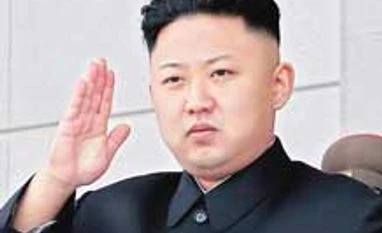
The vote at the General Assembly's committee on humanitarian issues follows reports that UN Secretary-General Ban Ki-moon planned this week to visit Pyongyang for talks with leader Kim Jong-Un.
South Korea's Yonhap news agency reported Monday that Ban, a South Korean, would be making the first visit by a UN secretary-general to North Korea in more than 20 years, but the UN said the following day that no such trip was planned in the immediate future.
"At present, bilateral relations between the United Nations and the DPRK are not good," said North Korea's Ambassador-at-large Ri Hung Sik.
The United Nations should stop presenting "such unfair measures" as the resolution condemning human rights, he told a news conference in New York earlier this week.
Last year's resolution was backed by 111 countries, with 19 against, including China and Russia, and 55 abstentions.
Ri dismissed the resolution as "the product of political confrontation and vicious slander" and insisted that his country is ready to address international concerns.
International alarm has grown since the release last year of a UN commission of inquiry report which concluded that North Korea was committing rights violations "without parallel in the contemporary world."
Roberta Cohen, an expert at The Brookings Institution, said the resolution helps to focus attention on North Korea and puts pressure on Pyongyang and leader Kim because of its reference to a possible ICC trial.
"The prospects for a human rights dialogue have increased with the focus on accountability. That is what gets them to come and say, 'Wait a minute, we better talk, we better have a dialogue'," said Cohen. "The ground work is being developed toward accountability and the North Koreans can see that."
After 10 UN resolutions and the commission of inquiry report, there is little sign however of changes on the ground.
In his latest report, UN special rapporteur Marzuki Darusman said there had been no improvement in the dire human rights situation over the past year.
Pyongyang continues to operate prison camps on a large scale and resorts to widespread use of summary executions, torture and arbitrary detentions to impose a "near-total denial of human rights," he said.

 "North Korea set to face UN censure over human rights")


 Connect with us on WhatsApp