
Not sure if Aadhaar is best model to accord benefits, says Supreme Court
The bench observed, liberating people from poverty is at one end of the spectrum and the right to privacy is on the other
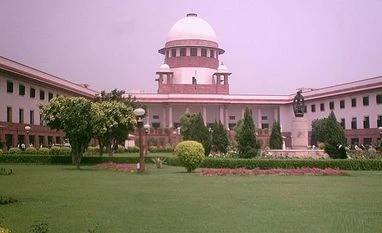 "Not sure if Aadhaar is best model to accord benefits, says Supreme Court")
WebinarsNew
Deep DiveNew
Explore Business Standard
The bench observed, liberating people from poverty is at one end of the spectrum and the right to privacy is on the other
The Supreme Court on Thursday said it was not sure whether bringing people "face to face" with authorities through Aadhaar was the best model as the State should reach them to accord the benefits of the welfare schemes.
A five-judge Constitution bench headed by Chief Justice Dipak Misra, hearing a clutch of petitions challenging Aadhaar and its enabling 2016 law, was told by the counsel for the Unique Identification Authority of India (UIDAI) that the 12 digit national identifier brought the citizens face to face with the service providers for getting the benefits.
"We are not sure if that is the best model. The individual should not be a supplicant. The State should go to him and give him benefits," the bench, also comprising Justices A K Sikri, A M Khanwilkar, D Y Chandrachud and Ashok Bhushan, said.
The bench observed that the UIDAI says Aadhaar is a means for identification, but the "only caveat to that is that there should be no exclusion".
Senior advocate Rakesh Dwivedi, appearing for UIDAI and the Gujarat government, said the development was necessary to ensure that people are freed from poverty.
Liberating people from poverty is at one end of the spectrum and the right to privacy is on the other, the bench observed.
The UIDAI referred to social ills like manual scavenging and prostitution and said that despite laws, these evils were rampant in the society and the apex court should strike a balance while dealing with the competing fundamental rights of citizens.
Referring to apex court judgements, the senior lawyer said it has been held that to save the freedom of speech and expression, the right to reputation of a citizen under Article 21 cannot be crucified.
The apex court, besides being the protector of fundamental rights, is also a "balancing wheel" to ensure that competing fundamentals co-exist.
Dwivedi then referred to a verdict by which a HIV+ve rape victim was denied the permission to abort the foetus after a doctors' panel gave the report that it could be fatal for the woman.
"The court balanced the rights in the case where fundamental right to life was involved," he said, adding that in the present matter, the issue merely pertained to identification.
"What is being done under section 7 of the Aadhaar Act covers human rights of a lot of people of our country. This court should act as a sentinel to ensure that right to privacy is balanced with all the other rights under Article 21 that Aadhaar covers," Dwivedi said.
The counsel for Dwivedi would resume his submissions on April 24.
Earlier, the bench had said that if biometric authentication is attached to every transaction entered into by a person, it would "form a wealth of information" necessitating the need for data protection.
First Published: Apr 19 2018 | 10:57 PM IST


 Connect with us on WhatsApp