President Barack Obama had decided the US would go alone in the raid that killed Osama bin Laden because Pakistan's trustworthiness was questionable due to their "close relationship" with various terrorist networks, former CIA director Leon Panetta has said.
"Pakistan was difficult because they had a close relationship to various terrorist networks, and you were never quite sure just exactly where their loyalties would lie," Panetta, the head of the CIA operation that killed al-Qaeda leader bin Laden at his Abbottabad hideout in Pakistan, said.
"It was for that reason, very frankly, that when we were looking at the bin Laden operation, which we would have preferred, frankly, to have worked with Pakistan. But there are so many questions raised about whether or not we could trust them that the president decided that we should do it alone," he told PBS news yesterday on the fifth anniversary of Osama's killing.
Panetta, also the former US defence secretary, said it has been a challenging period to develop the relationship with Pakistan.
"Obviously, Pakistan was helpful in being able to work with us in many areas. Certainly, in the intelligence area, we worked together. On military efforts, we worked together," Panetta, who was the head of the CIA at the time of bin Laden operation, said.
He said five years after the killing of bin Laden, reality is that terrorism remains a threat.
"It's metastasised into ISIS. It's metastasised into Boko Haram and Al-Shabaab. And so it continues to be very much a threat that the US and other countries in the world have to focus on. This is a long-term effort. We have had some success, there is no question about it. We have gone after their leadership.
"We have done well to prevent another 9/11- type attack, but there remains an awful lot more work to be done in order to protect this country. We have done a very good job at decimating al-Qaida's leadership particularly in Pakistan. And obviously, the bin Laden operation was kind of the primary effort to go after the spiritual leader of al-Qaida," he said.
"At the same time, Al-Qaida's probably metastasised, as we have seen with other terrorist operations in the Middle East. There are variations of Al-Qaida that are still operating very much in the Middle East and North Africa," Panetta added.
The US Navy Seals' raid killed bin Laden in 2011 in his compound in Abbottabad town near Pakistan army's elite training school.
Bin Laden was the founder of Al-Qaeda, the group that claimed responsibility for the September 11, 2001 attacks on the United States.

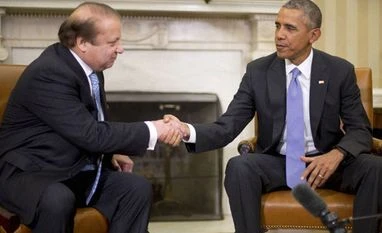 "Pak's trustworthiness was questionable by US for Osama raid: Former CIA director")


 Connect with us on WhatsApp