The Supreme Court on Tuesday transferred a PIL on cleaning of river Ganga, pending for over a decade, to the National Green Tribunal (NGT) which is hearing the matter since 2014.
A bench headed by Chief Justice J S Khehar said since issues relating to municipal solid waste and industrial waste are already being heard by NGT on a day-to-day basis, the remaining issues concerning the discharge of domestic sewage and other sources of pollution will also be now heard by the NGT.
The bench, which also comprised Justice N V Ramana, said the green panel will be required to submit an interim report to it every six months, only to give an idea as to the progress made and difficulties, if any.
It also granted liberty to petitioner M C Mehta to approach it if he had any grievances in consonance with law.
Mehta who appeared in person raised concerns over the hearing being carried out at the NGT saying there is no compliance mechanism.
While disposing of the matter, the bench said the NGT Act provided for penalty and other penal provisions in case of non-compliance of the tribunal's orders.
The apex court had on October 29, 2014, referred the issue relating to enforcement of the provisions of statutes touching environment and its preservation arising out of discharge of industrial effluents into river Ganga to NGT, citing time constraints.
The court had then said "time constraints unfortunately" do not allow the apex court to do monitoring on a continuing basis, no matter it has over the past 30 years devoted enough time and energy in that direction.
Mehta, who had filed the PIL in 1985, brought to focus the problems arising from unabated pollution in the river by referring to media reports alleging that Bharat Heavy Electricals Limited in Bhadrabad near Haridwar was discharging untreated industrial effluents into the Ganges.
He sought several reliefs primarily aimed at restraining polluting industries that had mushroomed on the banks of the river from polluting it.
Subsequently on September 9, 1985, the apex court issued notices to all industries situated in urban areas on the banks of Ganga to stop discharging effluents without treating them properly in accordance with the standards prescribed by the Central Pollution Control Board (CPCB).
In its first major order on September 22, 1987, the apex court directed closure of 20 tanneries working on the banks of Ganga and discharging effluents into it, noting that industrial pollutants were ten times more noxious then domestic waste.
Similarly, on January 12, 1988 the apex court, while reiterating the earlier directions, ordered the municipalities concerned to set up Sewage Treatment Plants (STPs) to ensure that untreated domestic sewage does not enter the river.
In 2006, it took note of the CAG report on the expenditure on the Ganga Action Plan for year ending March 2000 in which it was said that Rs 587.63 crore had been incurred by the implementing agencies.
It said that audit test check in the states, however, found many instances of financial mismanagement, such as fund diversion to unauthorised activities (Rs 36.07 crore), incorrect reporting (Rs 6.75 crore) and funds remaining unutilised with the implementing agencies (Rs 72.62 crore).
Several other important orders were also passed by the apex court on the PIL including that industrial units shall submit a time bound action plan for setting up of anti- pollution measures to be completed before March 31, 2015.

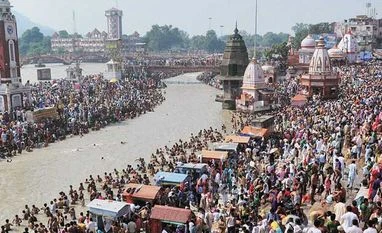 "SC transfers a PIL of 1985 on cleaning of river Ganga to NGT")

