President Barack Obama is backtracking on his warning that Britain would go to the "back of the queue" for a US trade deal, as he tries to contain the fallout of the UK's decision to leave the European Union.
The shift in tone illustrates how Britain's vote has abruptly scrambled Obama's reality. Where the president had tried to encourage the UK not to rashly abandon the European bloc, he now must reassure Britain that its decision to do so won't mean its demise.
His priority of locking in trade deals before leaving office now becomes a distant second, behind the more urgent task of restoring confidence in the financial markets and in Europe's future.
"The Obama administration and a number of leaders in Europe as well is trying to calm the waters. At this point, there are more questions than answers," said Miriam Sapiro, Obama's former acting trade representative and now an adviser at the strategy firm Finsbury.
Obama's attempt to show support for a struggling ally casts him in the role of forceful free-trade advocate at a time when all of the major presidential candidates running to replace him are vocally opposed.
Yet current and former Obama administration officials are operating under the assumption that Democrat Hillary Clinton, if elected, would come around to supporting Obama's trade deals after finding ways to reconcile specific concerns she's raised about jobs, wages and national security.
Before Britain's exit vote, or Brexit, Obama's administration was deep in negotiations toward a sweeping free trade deal with the 28-nation EU. Supporters of the Brexit had argued the UK wouldn't lose out on US commerce because it could easily broker a one-on-one deal with the US. So during a visit to London in April, Obama sought to correct the record, arguing that wouldn't "happen any time soon."
Obama's warning reflected his broader belief that separate trade deals with individual countries are too laborious, given the countless regulations, laws and standards that must be aligned to create a free trade zone.
Instead, Obama has sought to broker broad deals with universal requirements, so that any country that agrees to the conditions can join. His 12-nation Trans-Pacific Partnership with Asia, awaiting ratification in Congress, is a prime example of that multi-member approach.

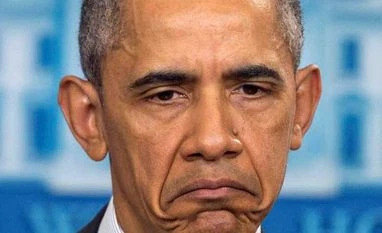 "Seeking post-Brexit calm, Obama backtracks on UK trade warning")


 Connect with us on WhatsApp