Home / India News / Sierra Leone area to hold 2-week Ebola 'lockdown'
Sierra Leone area to hold 2-week Ebola 'lockdown'
In 11 days, two teams buried 87 bodies, including a nurse, an ambulance driver, and a janitor
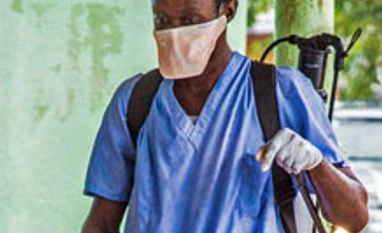
In this photo taken on August 9, 2014, A health worker sprays disinfectant against the deadly Ebola virus at a hospital in Kenema, 300 km from the capital city of Freetown, Sierra Leone
Health workers sent to Sierra Leone to investigate an alarming spike in deaths from Ebola have uncovered a grim scene: piles of bodies, overwhelmed medical personnel and exhausted burial teams.
The World Health Organisation says the health workers from several local and international agencies are racing to the latest Ebola hotspot, a diamond-mining area that Sierra Leone put on 'lockdown' yesterday.
"In 11 days, two teams buried 87 bodies, including a nurse, an ambulance driver, and a janitor who had been drafted into removing bodies piled up at the only area hospital," the WHO said in a statement last night.
"Our team met heroic doctors and nurses at their wits end, exhausted burial teams and lab techs, all doing the best they could, but they simply ran out of resources and were overrun with gravely ill people," said Dr Olu Olushayo, an official in WHO's response Ebola team.
In the five days before its members arrived, 25 people had died in a makeshift, cordoned-off section of the hospital in Sierra Leone's eastern Kono district. The Ebola virus carries its heaviest load right after death, with bodies being a frightening source of contagion.
Sierra Leone authorities said they ordered a two-week 'lockdown' there until December 23 in hope of containing transmission of the virus, which was confirmed in seven people yesterday.
People will be able to move within the district, but no one will be allowed to enter or leave, said Emmanuel Lebbie, a local official of the Independent Media Commission.
More than 6,000 people have died from Ebola in West Africa over the last year, including more than 1,500 in Sierra Leone since June. The country also has suffered a disproportionate number of deaths of health care workers. By the end of November, the virus had infected 622 health carers in West Africa and killed 346 of them, according to WHO figures.
Earlier this year, Sierra Leone ordered a nationwide lockdown for three days that authorities declared a success, keeping people inside their homes as health workers went door to door, handing out information about Ebola and uncovering new cases.
The latest hotspot is an indication of how long it could take to control the epidemic that started in Guinea a year ago, in an area bordering on Sierra Leone and Liberia, and quickly spread to capital cities in all three West African nations. Previous outbreaks had been contained in faraway villages in the rain forests of Central Africa.
Also yesterday, Sierra Leone's junior doctors continued their strike for a third day, seeking access to better medical care should they contract the Ebola virus.

 "Sierra Leone area to hold 2-week Ebola 'lockdown'")


 Connect with us on WhatsApp