
Don't blame farmers for air pollution, set up rice bio-parks: Swaminathan
In South India, stubble is not burnt as there is economic value as animal feed, he said sharing he had been pointing out for years many economic usage of rice straw.
 "Don't blame farmers for air pollution, set up rice bio-parks: Swaminathan")
Explore Business Standard
In South India, stubble is not burnt as there is economic value as animal feed, he said sharing he had been pointing out for years many economic usage of rice straw.
Eminent farm scientist M S Swaminathan on Monday said blaming farmers for air pollution in the national capital will take nowhere, rather Delhi and neighbouring state governments should set up rice bio-parks to help farmers switch to cleaner methods to get rid of stubble.
In South India, stubble is not burnt as there is economic value as animal feed, he said sharing he had been pointing out for years many economic usage of rice straw.
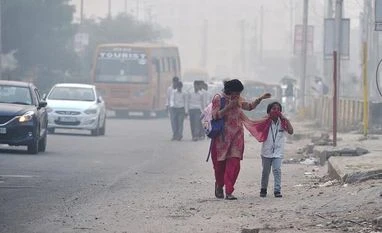
His comments come as Delhi-NCR has been engulfed in a thick blanket of smog since Diwali on October 27.
"We should stop blaming farmers since it will take us nowhere. Instead we should propose methods which are economically and ecologically desirable," Swaminathan said in a series of tweets.
Stating that air pollution in Delhi has become a matter of public health concern nationally and internationally, he said farmers are being blamed by many including the chief minister of Delhi for burning stubble and thereby causing atmospheric pollution.
To address the problem of stubble burning, the renowned scientist -- who is credited with bringing in green revolution in India -- suggested that the Delhi, Haryana and Uttar Pradesh governments should put up 'rice bio-parks' where farmers can convert stubble into income and employment.
"We should adopt a do-ecology approach with farmers to convert rice stubble into income rather than making them agents of eco-disaster," he said.
Recently, a rice bio-park was established by the M S Swaminathan Research Foundation at Nay Pyi Taw, Myanmar. It was funded by the Indian government. The rice biopark shows how stubble can be utilised to make products including paper, cardboard and animal feed, he added.
First Published: Nov 04 2019 | 8:00 PM IST


