
Telecom AGR dues: RBI closely monitoring developments, says Governor Das
In an interview with PTI, Das said so far no red flags have been raised but the central bank continues to monitor the situation closely
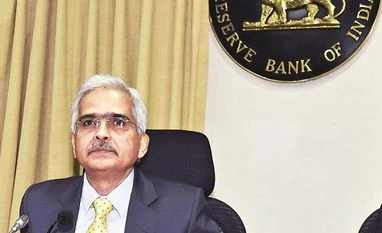 "Telecom AGR dues: RBI closely monitoring developments, says Governor Das")
WebinarsNew
Deep DiveNew
Explore Business Standard
In an interview with PTI, Das said so far no red flags have been raised but the central bank continues to monitor the situation closely
With massive Rs 1.47 lakh crore of AGR dues pushing telecom firms to the brink, Reserve Bank of India Governor Shaktikanta Das on Monday said the central bank is "very closely monitoring" the fallout of the crisis on lenders by way of a default, if any, by telecom players.
In an interview with PTI, Das said so far no red flags have been raised but the central bank continues to monitor the situation closely.
The Supreme Court last week rejected a plea by mobile carriers such as Bharti Airtel and Vodafone Idea Ltd for extension in the payment schedule and asked them to deposit an estimated Rs 1.47 lakh crore in past dues for spectrum and licences by March 17.
Some telecom firms are already struggling with mounting losses and debt and the additional liability has raised concerns of them defaulting on existing loans.
Das said he cannot comment on the Supreme Court ruling.
"With regard to the impact on the banking sector, we are very closely monitoring it. It all depends on how the companies concerned are able to make the payments and when they are able to make the payments. We are monitoring it," he said.
Of the estimated dues that include interest and penalty for late payments, Airtel and Vodafone Idea owe about 60 per cent.
While Airtel on Monday paid Rs 10,000 crore out of the Rs 35,586 crore dues that Department of Telecommunications (DoT) thinks the company owes to the government, Vodafone Idea's plea for being allowed to pay Rs 2,500 crore immediately and another Rs 1,000 crore by Friday to clear a part of the DoT estimated dues of Rs 53,000 crore was rejected by the apex court on Monday.
Airtel has said it will clear the remaining dues before the next date of hearing on March 17 but Vodafone Idea has so far not provided a clear deadline for making payments.
Das said no red flags on default by any telecom company has so far been raised with the central bank. "We are monitoring the situation. We are monitoring it very closely."
The telecom sector, he said, has been one of the pillars of the economic growth of India in the last two decades.
It created demand as well as jobs just like other pillars of massive infrastructure push given by the construction of the Golden Quadrilateral highway project and information technology or IT sector.
"In the telecom sector, there was a huge expansion. India was able to capitalize on that," he said.
The telecom boom not just lowered the cost of making phone calls and internet usage charges but also created massive employment.
In recent times, few companies in the telecom sector have folded up under mounting debt pile and intense competition, leading to job losses. Even in the current crisis, there are apprehensions being expressed about the continuation of at least one company.
Vodafone Idea Chairman Kumar Mangalam Birla had in December stated that the company may have to shut if there is no relief on the statutory dues. "If we are not getting anything, then I think it is the end of the story for Vodafone Idea," he had said. "It does not make sense to put good money after bad We will shut shop.
(Only the headline and picture of this report may have been reworked by the Business Standard staff; the rest of the content is auto-generated from a syndicated feed.)
First Published: Feb 17 2020 | 5:20 PM IST


 Connect with us on WhatsApp