The response of political parties to the Law Commission questionnaire on uniform civil code has so far been lukewarm with only BSP responding to it by slamming Prime Minister Narendra Modi for allegedly imposing the agenda of the RSS on the people.
Responding to the law panel's request to answer the questionnaire, BSP General Secretary Satish Misra said the party is attaching a press statement issued by Mayawati on October 25 in Lucknow.
Instead of answering the 16 questions put out by the law panel, the BSP, in its letter sent last week, said the press statement is its response to the questionnaire.
The BSP statement said the BJP has been trying to impose the agenda of the RSS on the people ever since it came to power at the Centre.
In the statement, Mayawati had also stressed on B R Ambedkar's vision behind the right to freedom of religion enshrined in the Constitution.
Seeking to widen its consultation on the contentious issue of uniform civil code, the Law Commission had last month asked all national and state political parties to share their views and plans to invite their representatives for interaction on the subject.
The panel has sent a questionnaire on the subject to the parties and asked them to send their views by November 21.
The Centre' move asking the law panel to examine the issue had assumed significance as the Supreme Court recently said it would prefer a wider debate, in public as well as in court, before taking a decision on the constitutional validity of 'triple talaq', which many complain is abused by Muslim men to arbitrarily divorce their wives.
For the first time in India's constitutional history, the Centre had on October 7 opposed in the Supreme Court the practice of triple talaq, 'nikah halala' and polygamy among Muslims and favoured a relook on grounds of gender equality and secularism.
The development came after a Muslim woman, who was divorced by her husband through a phone call from Dubai, challenged the Muslim practices of polygamy, triple talaq (talaq-e-bidat) and nikah halala, leading the Supreme Court to seek response from the Centre on her plea.
(Only the headline and picture of this report may have been reworked by the Business Standard staff; the rest of the content is auto-generated from a syndicated feed.)

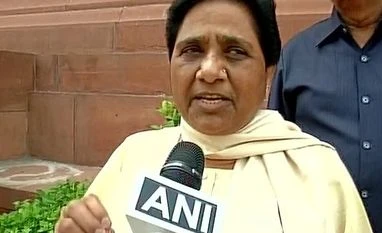 "Uniform civil code: BSP only party to respond to Law Commission questionnaire")


 Connect with us on WhatsApp