Home / World News / Refusing refugees after Paris attacks not 'way to go': UN
Refusing refugees after Paris attacks not 'way to go': UN
Multiple nations are facing calls to deny entry to refugees after French investigators said one of the attackers was a Syrian national
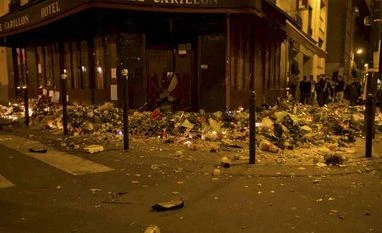
Shoes and other belongings are seen in front of Ke Carillon Hotel after panic broke out among mourners who payed their respect at the attack sites at restaurant Le Petit Cambodge (Little Cambodia) and the Carillon Hotel in Paris. Photo: AP/PTI
The United Nations have hit back at calls to turn back refugees from Syria to prevent extremists like those who carried out the Paris attacks from entering as purported asylum-seekers.
European countries, Canada and the United States are facing calls to deny entry to refugees after French investigators said one of the Paris attackers was a Syrian national who may have slipped into Europe as part of a wave of migrants.
"It is understandable that countries need to take whatever measures they need to take to protect their own citizens against any forms of terrorism," said UN spokesman Stephane Dujarric yesterday.
"But focusing that on refugees, vulnerable people who are themselves fleeing violence, would not be the right way to go," he said.
"These are people who are fleeing the very destruction of Daesh that we have seen in Paris."
Daesh, or the Islamic State group, has claimed responsibility for the attacks on Friday that left 129 dead in shootings and suicide bombings carried out at a concert hall, a sports stadium, bars and restaurants.
France's anti-immigration National Front leader Marine Le Pen called for an "immediate halt" to new arrivals, while Germany's xenophobic PEGIDA movement slammed Europe's immigration policy as a failure.
UN Secretary-General Ban Ki-moon has repeatedly said that closing borders is not the answer to Europe's worst migrant crisis since World War II and encouraged governments to take in more refugees.
"The reaction to the wave of refugees we have seen should be one of compassion and empathy," Dujarric said.
There are fears some of the assailants entered Europe as part of the huge influx of people fleeing Syria's war, after a Syrian passport was found near the body of one suicide bomber at the Stade de France in the name of Ahmad Al Mohammad.
The document has yet to be verified and Serbia detained a migrant yesterday whose passport contained the same data.
More than half -- 52% -- of all migrants arriving by sea to Europe are from Syria, followed by Afghans who represent 19% of arrivals and Iraqis at 9%, according to the UN refugee agency UNHCR.

 "Refusing refugees after Paris attacks not 'way to go': UN")


 Connect with us on WhatsApp