India today said the devaluation of the Chinese currency is a "worrying" development which will make Indian exports expensive and widen the trade deficit with the neighbouring nation.
Commerce and Industry Minister Nirmala Sitharaman said the devaluation of the yuan will make imports cheaper from China to India.
"The depreciation of the yuan is definitely going to make imported goods (from China) cheaper... The fact is my deficit with China will (also) grow," Sitharaman told reporters here after the first meeting of the Council for Trade, Development and Promotion.
In 2014-15, the bilateral trade between the countries stood at USD 72.3 billion with the trade gap at USD 49 billion. The government and the Indian industry have time and again raised concerns about the widening deficit.
India has been pushing China to give greater market access to Indian products such as agri, IT and pharmaceuticals.
"It is going to make imports from China even more cheaper (to India). Our products are going to be more expensive. So, that is an immediate black-and-white kind of a situation which is developing," she said.
Sitharaman pointed out that the imports are coming in not just because they are cheaper, but the excess capacity in China.
"So, China wants to push goods into different countries, particularly India, and that would become even cheaper with the currency devaluation," the minister explained.
Indian markets joined the global sell-off sparked by China growth concerns as the benchmark Sensex yesterday saw this year's worst single-day fall of 555 points, which also pulled down the rupee to more than a three-week low of 66.93.
China's central bank has devalued its currency by 0.51 per cent to 6.5646 per cent against the dollar, the lowest since March 2011.
"But currency volatility all over the world is a matter of worry, it is a cause for concern because your exports in terms of quantity in many sectors are remaining the same... But you are not earning out of it because of the volatility in the currency," she added.
Sitharaman flagged concerns about currency fluctuations overall and India's parity with those currencies, which are causing "a lot of concern".
"This is not the first time. In fact, this is the third major devaluation of the Chinese currency," she said.
The ministry is planning a meeting with Chief Economic Advisor Arvind Subramanian and Niti Vice-Chairman Arvind Panagariya to get the big picture on China in the context of steel imports as well as overall cheap imports coming into India.
"Yesterday's development will something add on to this meeting," she added.
Asked if India is preparing any kind of action plan to deal with Chinese imports, the minister talked about a case-to-case basis to find out the imported products that are causing injury to the Indian industry.
"And if that (injury) is established based on ground facts, then some anti-dumping duty or something can be brought in. We will be assessing it because our trade balance is adversely getting affected," she said.
To a question if there is a need for some intervention in the rupee market, Sitharaman spoke about two views.
"If you look at one school of thought which prevails, yes, if my currency is devalued, my exports would do better. But there is also another section or a school of thought which will say why should India's currency be devalued? If it is holding out against other currencies, let it hold out," she added.

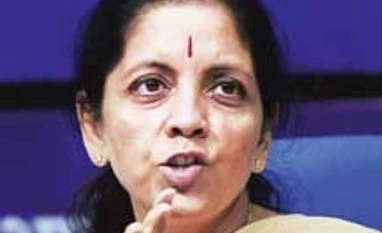 "Yuan devaluation worrying for Indian exports: Sitharaman")


 Connect with us on WhatsApp