
Asian shares fragile, dollar loses edge on Fed minutes
Nikkei down 0.3%, concerns about China weigh on oil prices
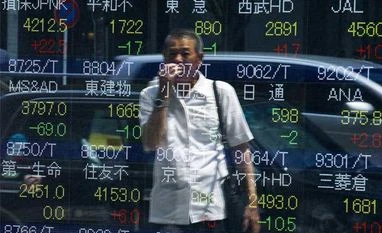 "Asian shares fragile, dollar loses edge on Fed minutes")
WebinarsNew
Deep DiveNew
Explore Business Standard
Nikkei down 0.3%, concerns about China weigh on oil prices
Concerns about slowing growth in China pressured Asian shares and oil prices, while minutes from the US Federal Reserve's July meeting dented expectations for a rate hike in mid-September.
Japan's Nikkei fell 0.3% in early trade while MSCI's broadest index of Asia-Pacific shares outside Japan was almost flat, barely holding above its two-year low hit on Wednesday for now.
"Markets are nervous of risks and investors are pulling funds out of emerging economies and resource exporters," said Daisuke Uno, chief strategist at Sumitomo Mitsui Bank.
Fears that Chinese growth, which carried the global economy following the international financial crisis of 2008, is slowing in the long term are affecting the outlook for many industries, with the commodities sector among the hardest-hit.
US crude oil prices fell more than 4% to 6 1/2-year lows on Wednesday following an unexpectedly large increase in US stockpiles.
The front-month futures contract in US crude
Brent crude futures
Falls in oil and other commodity prices hit many resource-exporting emerging economies hard, and they have suffered further shocks from capital outflows as the prospect of higher US interest rates looms larger.
MSCI's emerging market index fell to four-year lows on Wednesday.
Minutes from last month's Fed monetary policy meeting showed officials in broad agreement widely agreed that the economy was nearing the point where interest rates should move higher.
But they also noted lagging inflation and a weak global economy posed too big a risk to commit to "liftoff", leading some investors to question the likelihood of a rate hike in September.
US Treasury yields fell and money market futures rolled back expectations of a rate raise in September.
The dollar also lost its edge against other major currencies.
The dollar fell to a three-week low of 123.78 yen while the euro also rose to $1.1120 , compared to
Gold also gained
"Following the July FOMC minutes, we retain our call for September lift-off. However, we see the bar for the rate hike as having been pushed a bit higher. The higher bar, combined with lower energy prices and a modest deterioration in the international outlook since the July FOMC, has raised risks over this call," Rob Martin, economist at Barclays said in a report.
First Published: Aug 20 2015 | 6:27 AM IST


 Connect with us on WhatsApp