
"Economikes": the gatekeepers of Clinton's economic policy
Scores of world-class experts pour ideas into her campaign on the policies
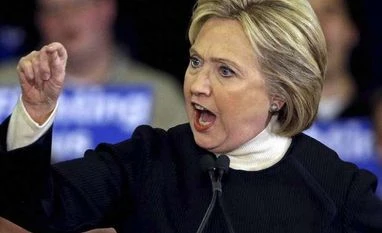 "\"Economikes\": the gatekeepers of Clinton's economic policy")
WebinarsNew
Deep DiveNew
Explore Business Standard
Scores of world-class experts pour ideas into her campaign on the policies
Hillary Clinton has no shortage of economic advisors. Scores of world-class experts pour ideas into her campaign on the policies she should champion in her bid for the White House.
But before much of the input reaches the Democratic candidate, it is filtered through a pair of staffers known inside the campaign as the "Economikes."
Working out of Clinton's campaign headquarters in Brooklyn, New York, Michael Shapiro and Michael Schmidt are helping shape what could be a lasting economic agenda if the former secretary of state overcomes Republican rival Donald Trump in November's election.
In an interview with Reuters, Shapiro and Schmidt described Clinton's process for forming policy by broadly soliciting ideas and crafting them into the action points that she takes to voters.
Before Clinton takes a position, Shapiro said: "she wants to know we have talked to and gotten input from everyone, making sure that we're consulting with labor, making sure that we're consulting with experts."
Clinton's inclusive approach to developing policy positions has been faulted for being slow and unwieldy. Much of the work of sifting through the wealth of sometimes disparate ideas and data it yields falls to the Economikes.
Both are recent graduates of Yale Law School. Prior to joining the campaign, Schmidt, 30, worked at the US Treasury Department and the Yale Investments Office, helping manage the university's endowment.
Shapiro, 29, worked at the White House for the National Economic Council. Earlier this year, he married the daughter of New York Senator Chuck Schumer.
The pair helps Clinton draw upon a deep bench of advisers, including economist Alan Krueger, Duke professor Aaron Chatterji and Simon Johnson, a former chief economist for the International Monetary Fund, along with scores of other academics and business people.
Some communicate regularly through emails, conference calls, meetings and memos. Others are tapped once or twice for specific expertise. Frequent contributor Alan Blinder, the former vice chairman of the Federal Reserve, said he will "usually email the Mikes" with ideas.
The fruit of the process will be on display today in Ohio, where Clinton is expected to give a speech contrasting her economic vision with that of Trump, a businessman who often names himself as his main adviser and is known for his off-the-cuff style.
Clinton has called raising middle class incomes the defining economic challenge of the time. So far, she has presented a mix of goals, including making child care more affordable and boosting jobs. Some business leaders have said her approach is reassuring, but progressives have criticized her policies as too moderate.
Trump, in contrast, often has taken business leaders by surprise with his policy proposals. He has promised to renegotiate international trade deals to pump up US manufacturing, vowed to penalize companies that move their headquarters abroad to avoid taxes, and pledged to dismantle Obama's financial regulation reforms.
One of the Mikes
While the "Economikes" nickname began as a joke, Shapiro said the campaign's digital team made it stick by using it in a Q&A posted on Clinton's web site.
Their bosses, senior policy advisers Jake Sullivan and Maya Harris, have been known to stick their heads out of their offices and ask for "one of the Mikes."
On email chains, CC: notes will sometimes include "plus the Economikes."
Humor aside, their work often is serious business.
After the tainted water crisis hit national headlines in January, Clinton dispatched Schmidt and her political director, Amanda Renteria, to Flint, Michigan to investigate.
Schmidt said the effort informed Clinton's approach to the water crisis during the Democratic debate in Flint, including her call for the governor to resign.
In other cases, they said, Clinton will ask the pair to research issues she's heard on the campaign trail, such as the case of an Iowa bowling alley owner, who told the candidate student debt made it hard for him to get business loans.
The campaign since has rolled out proposals to allow for refinancing of student debt and the use of income-based repayment programs to cut monthly payments.
Shapiro and Schmidt said the policy points they bring back to Clinton typically lead her to ask more questions, a process that can go on for several rounds before the candidate finally settles on a policy proposal.
First Published: Jun 21 2016 | 7:15 PM IST


 Connect with us on WhatsApp