
Rebuffing critics, Jaitley goes for growth, reform
FM says the government would prefer to use buoyant tax receipts to fund extra infra spending than to slash its borrowing target for FY16
 "Rebuffing critics, Jaitley goes for growth, reform")
WebinarsNew
Deep DiveNew
Explore Business Standard
FM says the government would prefer to use buoyant tax receipts to fund extra infra spending than to slash its borrowing target for FY16
Jaitley, in an interview with Reuters, brushed aside senior leaders in Modi's ruling nationalist party who rebelled after a heavy election defeat this month in Bihar, the country's third most populous state.
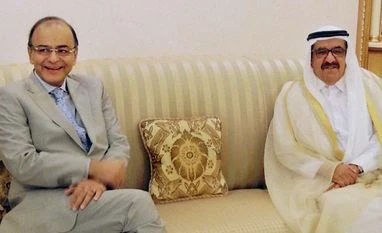
"People must have a sense of responsibility when they speak," he said over breakfast at his hotel in Dubai, where he was on a visit to attract investments from Middle Eastern sovereign wealth funds that would help drive growth.
The setback in Bihar dealt a blow to Modi's prestige after he campaigned actively in the state, and has emboldened his opponents in parliament who have used their control of the upper house to delay his economic reform agenda.
Jaitley said the Indian government would prefer to use buoyant tax receipts to fund extra infrastructure spending than to slash its borrowing target for the current fiscal year that runs to March 2016.
Achieving "high growth and depleting poverty" are top of the agenda of the government for the coming years, he said. Modi, elected in May 2014 with the strongest mandate in three decades, has set his ambitions to lead India for two five-year terms.
"I would stick to my fiscal deficit target of 3.9 percent this year and the priority will be to spend whatever resources the government has within the fiscal deficit target," said the 62-year-old Jaitley.
The government is ready to discuss all issues with the opposition to pass a key amendment in the forthcoming winter session of parliament that would pave the way for a new nationwide goods and services tax (GST), Jaitley also said.
It is not, however, willing to abandon the basic objectives of the tax, which would for the first time turn India into a common market and by some estimates add as much as 2 percentage points to gross domestic product.
"Without compromising on the architecture itself, and keeping a general consensus between the states and the centre in mind, I think a discussion is reasonably possible," he said.
Modi has been unable to pass the GST because his coalition lacks a majority in the upper house of parliament, where India's states are represented. One controversy has been over a proposed state levy that some say would make the tax complex to administer.
After the Bihar defeat, his chances of securing control over the chamber in this five-year term have evaporated, compelling him to seek dialogue with the opposition to implement his reform agenda.
First Published: Nov 17 2015 | 1:16 PM IST


 Connect with us on WhatsApp