
Iran says crude market oversupplied, balance to be restored
Under Iran's buy-back system foreign firms have been banned from booking reserves or taking equity stakes in Iranian companies
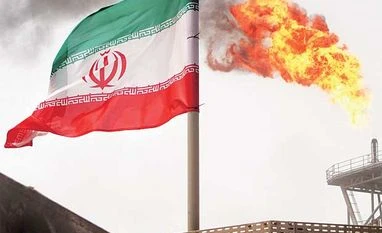 "Iran says crude market oversupplied, balance to be restored")
WebinarsNew
Deep DiveNew
Explore Business Standard
Under Iran's buy-back system foreign firms have been banned from booking reserves or taking equity stakes in Iranian companies
Iran's Oil Minister said on Monday the oil market was oversupplied but predicted balance between demand and supply will be restored, Iranian state television reported on Monday.
"The oil market is oversupplied now but there are expectations that there will be balance between demand and supply in the market," Bijan Namdar Zanganeh was quoted as saying by Iran's state TV, without saying when that may happen.
A Reuters Survey on Friday showed the Organization of the Petroleum Exporting Countries' oil output was likely to reach its highest in recent history in July as Iraq pumps more and Nigeria manages to export additional crude despite militant attacks.
Supply from Opec rose to 33.41 million barrels per day (bpd) in July from a revised 33.31 million bpd in June, according to the survey based on shipping data and information from industry sources.
Since a landmark nuclear deal was reached with major powers in 2015 leading to lifting of sanctions, Iran has been planning to raise its crude production to the pre-sanctions level of four million barrels per day (bpd).
To regain the production level, Iran has sweetened the terms it offers on oil development contracts to draw the interest of foreign investors. Iran needs $200 billion in foreign money to reach its goal.
Zanganeh said that the first of Iran's new oil and gas investment contracts for international companies will be launched this week.
"The government will approve the new contracts on Wednesday," Zanganeh told reporters, state TV reported.
The launch of Iran's new oil contracts, the Iran Petroleum Contract (IPC) has been postponed several times as hardline rivals of pragmatist President Hassan Rouhani resisted any deal that could end the buy-back system.
Iran's top authority Supreme Leader Ayatollah Ali Khamenei said last month that no new oil and gas contracts for international companies will be awarded without necessary reforms.
"Iran's priority is developing jointly owned oil and gas fields, as well as those in which we are after improved oil recovery." Zanganeh said
Oil majors have said they would only go back to Iran if it made major changes to the buy-back contracts of the 1990s, which companies such as France's Total or Italy's Eni said made them no money or even incurred losses.
Under Iran's buy-back system foreign firms have been banned from booking reserves or taking equity stakes in Iranian companies.
First Published: Aug 01 2016 | 2:42 PM IST

