
RBI to hold rates on April 7, says poll
RBI governor had surprised markets by cutting repo rate last week
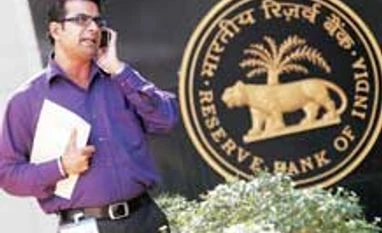 "RBI to hold rates on April 7, says poll")
WebinarsNew
Deep DiveNew
Explore Business Standard
RBI governor had surprised markets by cutting repo rate last week
The Reserve Bank of India (RBI) will lower interest rates further over the coming year but only gradually, wary that subdued inflation may pick up again, according to economists polled by Reuters, who gave only a one-in-three chance it would act again in April.
The RBI is among a growing number of global central banks which have recently eased policy, after a steep drop in crude oil prices since June fuelled fears of deflation in many economies.
Governor Raghuram Rajan surprised markets last week by cutting the repo rate to 7.50%, its second mid-meeting cut since January.
Markets had widely expected another cut but the timing came as a surprise, coming just days after Prime Minister Narendra Modi's government announced a budget that sought to keep borrowing in check while increasing infrastructure spending.
That 25 basis point cut is likely to be followed by another in the June policy review, the poll conducted March 4-9 showed. Only eight of 26 economists gave a more than 50% probability the RBI would move again at the April 7 meeting.
"With inflation and exchange rate risks likely to increase towards the end of 2015, the RBI's monetary policy easing will likely be front-loaded," said Hanna Luchnikava, economist at IHS Global Insight.
After a cut in the second quarter, economists predict Rajan will hold rates steady between July to September and again lower the repo rate to 7% in the fourth quarter, unchanged from a January poll.
The cash reserve ratio is likely to remain at 4% through this fiscal year.
Supporting the RBI's dovish stance is consumer inflation, which has cooled rapidly to 5.11% in January from double-digit rates just over a year ago, due to lower energy and food costs coupled with weak demand from consumers.
Inflation is now comfortably within the central bank and government's new target ceiling of 6% by January 2016, a monetary policy overhaul announced in the union budget.
But that is unlikely to lead Rajan into a steep rate cutting cycle as much of the deceleration in price rises is due to the slump in global oil prices, which have started to recover slightly.
An expected mid-year rate hike from the US Federal Reserve is also likely to fuel a dollar rally and weaken the rupee, making imports more costly and pushing inflation higher.
A Reuters poll last week showed the rupee, among the most stable and best performing emerging currencies this year, will remain around current levels for most of 2015 before weakening slightly to 63.50 a dollar in 12 months.
Still, while a spike in inflation could pause the RBI's rate cuts, none of the economists polled expect Rajan to change track and tighten policy anytime soon.
That is likely to support sentiment and aid growth in Asia's third largest economy, which according to a new government calculation grew 7.5% year-on-year in the final three months of last year.
First Published: Mar 09 2015 | 3:16 PM IST


 Connect with us on WhatsApp