
Hurricane Irma: Wall Street opens lower as investors assess fiscal impact
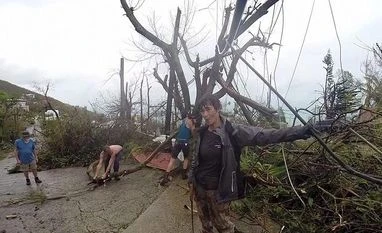
Irma was set to hit Florida with FEMA warning parts of Florida could be out of electricity for days
 "Hurricane Irma: Wall Street opens lower as investors assess fiscal impact")
WebinarsNew
Deep DiveNew
Explore Business Standard
Irma was set to hit Florida with FEMA warning parts of Florida could be out of electricity for days
US stocks opened lower on Friday as investors assessed the financial impact of hurricane Harvey and tracked Hurricane Irma as it plowed toward Florida.
The three major Wall Street indexes were on track to end the week lower, with many economists forecasting that third-quarter GDP will take a hit due to the hurricanes.
Irma was set to hit Florida as early as Saturday, with FEMA warning that parts of Florida could be out of electricity for days, if not longer.
The hurricane, the strongest recorded in the Atlantic Ocean, comes on heels of Harvey, which shut a quarter of U.S. refineries and 8 percent of U.S. oil production.
"Having two major hurricanes strike in one quarter, it is surely going to show up in the GDP," said Kim Forrest, senior equity research analyst at Fort Pitt Capital Group in Pittsburgh.
Harvey may end up being the most expensive natural disaster in the United States since 1980, costing $70 billion to $108 billion, according to BofA Merrill Lynch.
The brokerage cut its estimate for third-quarter U.S. GDP growth by 0.4 percentage points to 2.5 percent.
At 9:37 a.m. ET (1337 GMT), the Dow Jones Industrial Average was down 25.63 points, or 0.12 percent, at 21,759.15 and the S&P 500 was down 4.02 points, or 0.16 percent, at 2,461.08.
The Nasdaq Composite was down 11.69 points, or 0.18 percent, at 6,386.18.
Gold prices rose to their highest in more than a year and the dollar index hit its weakest since January 2015 as the broader markets braced for North Korea celebrating its founding on Saturday, and as Irma headed for Florida.
New York Fed President William Dudley on Thursday toned down his hawkish view, saying rates should rise only gradually given low inflation, but did not repeat an assertion three weeks ago that he expects to raise rates once more this year.
Traders have sharply reduced the odds for another interest rate hike this year. The chances of a December move are at 26.4 percent, compared with 42 percent a week ago, according to the CME Group's FedWatch tool.
Ten of the 11 major indexes were lower, with the energy index and industrials sector among the biggest laggards.
Comcast's more than 2 percent fall weighed on the S&P and the Nasdaq.
Among stocks, Kroger fell 6.41 percent after the biggest U.S. supermarket company gave a disappointing results and forecast.
Equifax sank 16.44 percent, the biggest percentage loser on the S&P, after the provider of consumer credit scores said personal details of as many as 143 million U.S. consumers were hacked.
American Outdoor plunged 13 percent after the gun maker's profit and revenue missed estimates.
Declining issues outnumbered advancers on the NYSE by 1,673 to 816. On the Nasdaq, 1,340 issues fell and 926 advanced.
(Reporting by Sruthi Shankar in Bengaluru; Editing by Savio D'Souza and Saumyadeb Chakrabarty)
First Published: Sep 08 2017 | 8:01 PM IST


 Connect with us on WhatsApp