One in every two small and medium enterprises (SMEs) listed on the SME platform of exchanges since 2012 is trading in the red.
On Thursday, the BSE listed the 300th company on its SME platform. Together with the National Stock Exchange (NSE), a total of 507 companies have been listed on SME platforms since 2012, when the platform was first started. Of these, 259 or 51 per cent are in the red, and 47 have shed more than 75 per cent over their issue price.
Despite the possibility of high returns, experts said there was a high probability of losing one’s entire capital in SME stocks. Analysing these firms can be a challenge as they are not tracked by analysts and there is not much information in the public domain. This means investors are left to themselves when it comes to assessing the fundamentals and gauging the credibility of promoters.
"In the SME universe, only one in five companies is expected to do well. Investors should take investment decisions based on this perception. This is a high-risk segment and investors will have to constantly monitor their investments and the performance of the companies. It is not for a retail crowd but savvy investors who understand the risks," said AK Prabhakar, head-research, IDBI Capital.
Funny Software, Bronze Infra-Tech and Edynamics Solutions have shed the most, losing between 95 per cent and 98.6 per cent.
Some investors have been rewarded. Four companies — Suyog Telematics, Raghuvansh Agrofarms, Vishal Fabrics and BC Power Controls — have gained above 1,000 per cent over their offer price. Overall, 98 companies have risen more than 100 per cent. Seventy-two of the 507 companies have migrated to the main board of their respective exchanges.
These have fared better, with 45 of them trading in the green.
The last financial year was the second best for SME IPOs, with more than 100 offerings mopping up more than Rs 1,600 crore.
The SME segment has been grappling with issues such as lack of liquidity and lacklustre institutional participation. According to experts, the need is to bring in priority investing from big institutional players and tweak the lot size to improve liquidity.
Both the BSE and the NSE had launched separate SME platforms in March 2012, after the Securities and Exchange Board of India came out with easier listing and disclosure guidelines to help small companies tap into the capital market. Besides improved transparency, an IPO route for SMEs reduces their dependence on debt financing and helps them maintain their debt-equity ratio efficiently, said experts. Listed SMEs with good ratings are able to get loans at lower interest rates than the market.

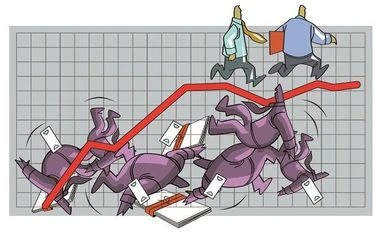 "Over half the SME universe in the red: Here're the top losers since 2012")












 Connect with us on WhatsApp