Book review: Sophia's choice
The book is fascinating for its portrayal of a significant period in world history with a Punjabi princess-turned-activist as its protagonist
Sudha G Tilak SOPHIA: PRINCESS, SUFFRAGETTE, REVOLUTIONARY Author: Anita Anand
Publisher: Bloomsbury
Pages: 400
Price: Rs 599
Lost in the pages of India’s colonial history, this story of a Punjabi princess-turned-activist from a former century by BBC journalist Anita Anand makes for an extraordinary and interesting biography.
Sophia was an early example of someone who sought to make sense of her family’s history in the East and her displaced adult life in the West. Her grandfather was Maharaja Ranjit Singh, the “Lion of Punjab”, the king who according to legend rode with the Koh-i-Noor strapped to his arm. Her father was Maharaja Duleep Singh, exiled from his kingdom in the Punjab at the age of 15 in the 19th century, a fallout of the Anglo-Sikh wars. His kingdom was seized by the British but Queen Victoria displayed a rare lenience to the deposed royal and offered Duleep Singh, the last maharaja of Punjab, exile in England with a stipend.
Duleep Singh built his mansion in the countryside, enjoyed Her Majesty’s benevolence and adopted English customs and manners. Singh’s credentials as an Indian royal in England, who married the daughter of a German businessman and an Abyssinian slave, evoked the right kind of interest in London society. But not as much as his daughter Sophia, Queen Victoria’s adopted goddaughter, whose rise from a toothy kid to a fashionable member of London social set, the book records in detail.
Born in 1876, Sophia grew up with her five siblings and many animals in the comfort of her father’s mansion in Suffolk. Given the Queen’s fondness for her father and for her as a chosen goddaughter it would have been an idyllic childhood but for the fact that her father’s money soon ran out and the creditors were at the door. Her mother died when Sophia was 11 and Duleep Singh eloped with his chambermaid, leaving the family destitute. Sophia and her sisters were given shelter at Hampton Court Palace, thanks to the Queen’s munificence. Her sisters moved on (one to Lahore, another to Germany), but Sophia seemed content to grace the society pages of London magazines in the company of her Pomeranians and fashionable ladies in their furs and silks.
Maharajah Duleep Singh dressed for a state_function in 1875
A chance holiday to India and the kingdom of her forebears in Punjab changed Sophia’s views about her own heritage and colonial oppression. She returned to England charged up about the struggle for India’s independence and regarded herself as a tool in championing causes. Her first was to gather support for lascars, the Indian maritime troopers who worked in terrible conditions on European ships. She later tended to wounded Indian soldiers in World War I and her public engagement with the disenfranchised grew. She became a strident crusader when she joined the Women’s Society for Social and Political Union, a prominent suffragist group in England in her thirties.
Sophia’s transformation from an exotic London fashionista to a scruffy, angry, hard-smoking suffragette makes for a fascinating story in itself. Despite documents, in the form of notes and dossiers she kept, Sophia is presented to the reader more through the eyes of society as it was then — a curiosity, part of an aristocracy that rose from colonised oppression and a woman offered a privileged position by her colonised masters who sought to protect and restrict.
The book is fascinating for its portrayal of a significant period in world history, with emerging freedom movements in India and revolutions elsewhere. It also was the time that saw the rise of remarkable women, such as Sophia, as champions of women’s empowerment that encompassed both poor and aristocrat. It is women such as Sophia who were willing, despite their backgrounds, to enrol themselves in street fights that gave the women’s movement in the West so much of its muscle.
Sophia: Princess, Suffragette, Revolutionary Author: Anita Anand
Publisher: Bloomsbury
Pages: 400
Price: Rs 599

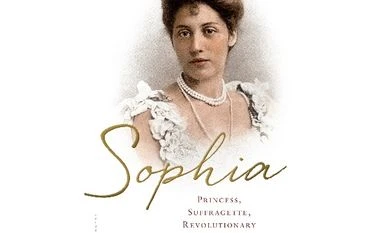 "Book review: Sophia's choice")


 Connect with us on WhatsApp