Between the intricate shrines of Angkor Wat, the diverse landscapes of the countryside and the kindness of its people - and despite the horrors of its recent history - Cambodia knocks a lot of people off their feet. It certainly had that effect on me when I first visited a few years ago and then again when I returned this winter. Yet it was impossible not to notice the school-age children begging barefoot at the major tourist sites, underage local women escorting Western men on sex tours, and the proliferation of seemingly unsustainable large-scale resorts being built on the pristine southern coast.
It's a classic traveller's question, one that is especially pronounced in developing or poor countries: is your visit to a destination ultimately helping or hurting the place and its people? Is it possible to travel ethically in such places?
According to a collection of studies compiled by the Center for Responsible Travel, most travellers want to make a positive impact on the places they visit. To meet the rising demand for this kind of travel, an increasing number of organisations and resorts are trying to help travellers plan their visits more conscientiously, not only to minimise the potential negative effects of their visits but also, even more vitally, to maximise the positive impact and allow guests to have an active role in the process.
Of course, there will always be debate about whether these goals are realistic in certain countries. Some, like Iran, are under international sanctions; others, like Myanmar, have opened to travellers but remain complicated places to visit. (Daw Aung San Suu Kyi, the country's opposition leader, only recently changed her position and now encourages tourism, with the hopes of benefiting locals and bringing Myanmar a more international audience.)
"I would advise travellers to investigate why a country is being sanctioned or boycotted, and determine to the best of their ability if they agree with the reasoning behind the boycott/sanctions," says David Krantz, the programme director for the Center for Responsible Travel. ("Boycotting a country altogether may ultimately harm individuals who have no relation to the reasons behind the boycotts," he adds.)
A good first step is setting up personal guidelines: eat, stay and buy locally whenever possible (and use accredited local guides); respect local customs; take note of your carbon footprint and research how to offset flights (sites like nature.org's carbon calculator can help).
The nonprofit Ethical Traveler produces an annual list of the 10 most ethical destinations in the world based on data that includes environmental protection, human rights and social welfare. (Winners for 2014 included Chile, the Bahamas, Mauritius and Lithuania.) The group looks at not only current statistics and research from groups like Reporters Without Borders, Unicef and the World Bank but also at the countries' recent history. Although there is no governing group regulating "ethical travel", international certification processes like those overseen by the Global Sustainable Tourism Council (gstcouncil.org) come closest to creating a framework with criteria concerning sustainable planning regulations, property acquisitions that take into account indigenous rights, and access to sites for people with disabilities, among others.
Private enterprises are pursuing similar goals. A relative newcomer, the Long Run Initiative is an example of an innovative alliance on a smaller scale. Founded by Jochen Zeitz, the former chief executive of Puma and a longtime advocate of environmentally sustainable business practices, the group grants certification to member hotels and properties that abide by its core principles: conservation, community, culture and commerce. "It begins with the business itself committing to transparency, using the best of the local laws or international best practices," says Zeitz.
One area that can be a particular Pandora's box is lodging. Are hotels taking care of their employees, promoting sustainability and aiding in the development of local community initiatives? Some experts recommend looking into locally owned properties first. "Foreign companies might be sending revenue overseas or buying furniture or food abroad, so a fraction of the money stays in country," says Krantz. "If you are able to identify a locally owned business, more stays on the ground." But, he adds, "a lot of international chains do have a great framework for this kind of travel."
The resort chain Six Senses is an example of this international model, especially in its efforts toward cross-educating its guests and local communities. The brand's Laamu Hotel in the Maldives, for example, doesn't use any plastic bottles, and screenings of the documentary Trashed, about the environmental risks of poor waste management, are shown in local villages.
Some larger companies like the Marriott Group have whole divisions devoted to social responsibility, with a particular focus on empowerment programmes for women. JW Marriott, for example, is introducing an internal ambassador program in partnership with the nonprofit, Vital Voices, which empowers female associates to engage with local businesses owned by women.
Since my first trip to Cambodia, I have discovered a network of hotels devoted to avoiding sex tourism (ecpat.net was a good resource for learning more about this problem); restaurants with culinary schools geared to teaching locals (friends-international.org has an eatery in Phnom Penh based on this model); and resorts in the countryside like the Vine Retreat which also supports a local school. Complications remain, but I hope my next trip to the country - and really any developing nation - will be a more conscientious one.
©2014 The New York Times

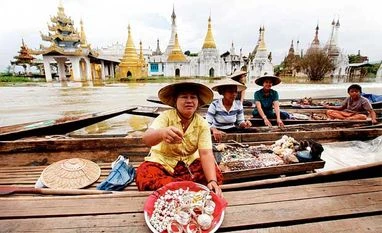 "Eat, Stay, buy locally")


 Connect with us on WhatsApp