Kamal Haasan, the man who turned to biryani to make a case for Jallikattu

If there is one dish that has been impacted by history, politics & geography, it is the biryani
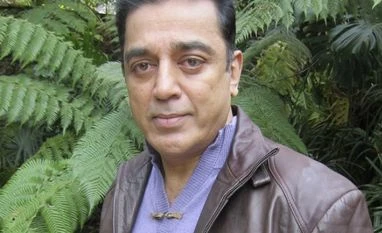
Kamal Haasan, biryani, Jalikattu ban, Tamil Nadu
Kamal Haasan
Veenu Sandhu
Last Updated : Jan 13 2017 | 11:39 PM IST
There is anger in Tamil Nadu and at the centre of it is Jallikattu, the centuries-old tradition of taming the bull that is unique to the state. Vociferous calls for revoking the Supreme Court ban on the sport have reached a crescendo. Some organisers have threatened to go ahead with the event despite the ban. The state’s politicians, including Chief Minister O Paneerselvam, are lobbying furiously in favour of the sport. Had the court lifted the ban, Jallikattu would have been celebrated in the state today, when the harvest festival of Pongal begins. But that hasn’t happened, so the protests continue.

In the midst of this turbulence, the ubiquitous biryani suddenly, and quite unexpectedly, had the spotlight briefly turned on it by none other than Southern superstar Kamal Haasan. Making a case for Jallikattu, which Haasan said he has participated in during his youth, the actor argued: “If you want a ban on Jallikattu, let’s also ban biryani.” His point is that while Jallikattu is about taming the bull, and not harming it, for biryani animals have to be slaughtered.

That’s a strike straight in the stomach from the 62-year-old actor who is trained in karate. The impact of a ban on biryani, hypothetical as the thought is, would be felt across India, given that the biryani economy is spread from Kashmir to Kanyakumari. Why, there is even a Naga version of the classical biryani. The sceptic can look up “peri peri Naga chicken biryani” that is cooked with “very spicy” Naga pickle.

History, politics and geography, if there is one dish that has been impacted by it all it is the biryani. The origin of the biryani in India remains a subject of debate. A legend goes that Shah Jahan’s wife, Mumtaz Mahal, came up with the dish in the 1600s to feed the undernourished Mughal army. Another theory is that it came to India with Turco-Mongol conqueror Timur’s invasion in 1398. Some say the Mughals brought it here from Persia. Others insist that it came to South India first with the Arab traders. 

Today, the dish prepared with long-grain aromatic rice and a variety of spices is found across the country: from the bylanes of Lucknow and Old Delhi to the kitchens of five-star hotels. During the course of its journey to different parts of India, it has adapted to local flavours — and circumstances. For example, when Awadh’s last nawab, Wajid Ali Shah, was exiled in 1856 to a Kolkata suburb, his personal chef gave it a humble twist with potatoes as the poor households could not afford meat. It is today a Kolkata specialty prepared primarily with potatoes and eggs.

Then there is the Hyderabadi biryani that developed under Asaf Jah I, one of Aurangzeb’s governors, and which originally used only goat meat. There is also the Bohri biryani that is rich in tomatoes. Popular in Haasan’s state is Dindigul biryani that uses curd and lemon juice to give it a tangy touch. And though there is also the vegetarian biryani, purists will insist it doesn’t count. 

Such is the biryani’s popularity that even a coffee chain like Café Coffee Day couldn’t help but include it in its menu. So now, it has chicken biryani sitting alongside its range of coffee. 

The extent of India’s biryani economy is anybody’s guess— perhaps even unfathomable, just like the idea of banning it.

Haasan’s office turned down a request for an interview with him on the subject. The actor, his office said, has already expressed his views and is not willing to discuss the matter further. For the moment, the biryani survives.

One subscription. Two world-class reads.

Already subscribed? Log in

Subscribe to read the full story →
*Subscribe to Business Standard digital and get complimentary access to The New York Times

Smart Quarterly

₹900

3 Months

₹300/Month

SAVE 25%

Smart Essential

₹2,700

1 Year

₹225/Month

SAVE 46%
*Complimentary New York Times access for the 2nd year will be given after 12 months

Super Saver

₹3,900

2 Years

₹162/Month

Subscribe

Renews automatically, cancel anytime

Here’s what’s included in our digital subscription plans

Exclusive premium stories online

  • Over 30 premium stories daily, handpicked by our editors

Complimentary Access to The New York Times

  • News, Games, Cooking, Audio, Wirecutter & The Athletic

Business Standard Epaper

  • Digital replica of our daily newspaper — with options to read, save, and share

Curated Newsletters

  • Insights on markets, finance, politics, tech, and more delivered to your inbox

Market Analysis & Investment Insights

  • In-depth market analysis & insights with access to The Smart Investor

Archives

  • Repository of articles and publications dating back to 1997

Ad-free Reading

  • Uninterrupted reading experience with no advertisements

Seamless Access Across All Devices

  • Access Business Standard across devices — mobile, tablet, or PC, via web or app

Next Story



