Jyoti Vishnu Savade lives in Yavatmal, Maharashtra. She needs Rs 15,000 to expand her business of supplying daily tiffins to office-goers.
Pramila Bag is a paddy cultivator from Sambalpur, Orissa. She needs Rs 12,000 for crop cutting, labour and transportation.
Wahengbam Ibemhal Devi is a widow who has been running a tea stall in Imphal, Manipur, for the last two years. She wants to widen her customer base by adding more variety to her menu and needs Rs 15,000 to do so.
Rang De co-founders Ramakrishna NK and Smita Ramakrishna
Savade, Bag and Ibemhal Devi are three of the many people across India whose lives have been transformed by microcredit. All three have previously received (and re-paid) small loans from lenders through Rang De, a Bangalore-based non-profit peer to peer lending platform on the internet, that has successfully used a peer-to-peer lending model to benefit a diversity of people across India.
“Rang De grew out of our frustration that the Internet in India was not being leveraged to aid the poor,” says Ramakrishna NK, who co-founded the organisation with his wife, Smita. “We were both inspired by Nobel laureate Muhammad Yunus’s Grameen Bank, but realised that conventional micro-credit in India was frightfully expensive.” The reason, the duo realised, was the huge cost of raising capital. “So we came up with the idea of peer-to-peer lending, or crowd sourcing, as a way to make micro loans cheaper,” he says. In their model, social investors (or lenders) can browse stories of borrowers, understand who they are and why they need a loan, and then contribute to the amount needed in multiples of Rs 100. The borrower repays the amount in a fixed time at an interest of 10 per cent. “From this, we deduct the field partner’s fee, a fixed contingency amount and our expenses, and return 2 per cent on the capital put in by our social investors,” says Ramakrishna. “It’s all transparent.”
The impact of these micro loans, from the time Rang De began in 2008, has been huge. New investors and borrowers join Rang De every day; at last count, the organisation had disbursed 32,483 micro loans. Their repayment rates are high, in spite of the fact that loans are disbursed mainly to high-risk individuals with no financial leverage that formal banks won’t consider as borrowers. “In all 92 per cent of our loans are repaid on time; under 8 per cent are delayed for a variety of reasons but paid nevertheless. We have very few defaulters,” says Ramakrishna. He isn’t surprised. “A loan from Rang De at 10 per cent is a huge financial relief for most borrowers, as conventional micro finance companies lend at around 30 per cent, and money-lenders often lend at rates as high as 12 per cent per day! A Rang De loan represents the much needed capital to the borrower. And, it is not dole, so it doesn’t compromise their self-respect.”
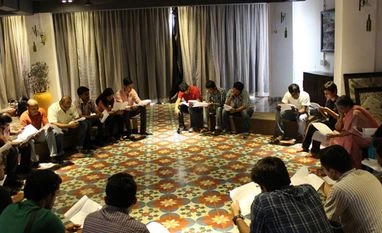
Currently, Rang De disburses about Rs 10 crore in micro loans to borrowers across India. It works with 16 active field partners spread across states like Manipur, Orissa, Maharashtra and Madhya Pradesh. These are NGOs with an extensive network who vet borrowers and ensure that social investors get regular reports on how their investments are faring. Transparency is something that Rang De is paranoid about, which is appropriate given the flak that micro credit financing schemes in India have sometimes drawn. “We publish our interest rates; provide regular updates to our social investors; hold regular offline meetings, Rangdevous, in different cities where all the players involved with Rang De meet face to face and even invite social investors to join us on field trips to meet field partners and borrowers,” says Ramakrishna.
There has been an unintended fallout of all these efforts that the Ramakrishnas had not quite anticipated. “We’ve seen that our social investors seem to become more empathetic after being associated with us and connecting with their borrowers,” says Ramakrishna. “This year, after the floods in Odisha, we sent an appeal for donations to all our investors who had lent to people in the state. Within two hours, we raised about Rs 3 lakh.”
The significance of the Rang De model is that it has successfully used technology to put a human face to poverty. By doing so, it has managed to add the one element often lacking in the world of finance — compassion. “Our vision is to scale up our model so that we are able to disburse ~100 crore annually,” says Ramakrishna. “Having seen the impact of Rang De, I feel certain that this could go a long way in making poverty history in India.” To learn more, visit www.rangde.org or www.facebook.com/rangdeorg?fref=ts
Next fortnight, the story of a unique toy bank for underprivileged children based on the belief that toys represent a child’s fundamental right to a childhood

 "NGO Rang De's peer to peer lending platform on internet makes big out of small")


 Connect with us on WhatsApp