Underdog spirit evokes a strange sense of oneness among watchers of sport. And an underdog victory generally translates into a feat befitting the very acme of sporting romanticism. An underdog defeat, on the other hand, mostly sparks a sad consternation, “they-surely-deserved-better” stuff. A rare, brilliantly engrossing exhibit last Sunday managed to simultaneously capture these dualities.
Russia withstood a pass assault — 1,114 genteel ones, to be precise — by Spain’s latest troop of twinkle-toed danseurs and eventually prevailed on penalty kicks in the football World Cup. In Champions Trophy hockey, India ran Australia ragged with a speed and skill that we scarcely thought they were capable of, only to shockingly disintegrate in the shootout.
If Spain’s performance, in the words of the innovative Barney Ronay in The Guardian, was “dinner jazz football — nifty, neat, but also apparently without end”, India’s was like a boy band belting out hits from its first album at a teenage birthday party: original, refreshing, every bit encore-worthy. Both lost — one rather deservedly, the other less so.
“This is the best I’ve seen India at a major tournament in a long time. Generally, we play well in a couple of games and are terrible in the rest. This time, the consistency was remarkable,” notes former national team captain Viren Rasquinha, the most articulate of India’s hockey brains. “In the final, despite playing so well, it just didn’t happen.”
Before the tournament in Breda, the Netherlands, any suggestions that India would be able to stand up to the might of Australia — or any of the other top dogs for that matter — were naturally dismissed. India vs Australia on a hockey field, after all, is one of the great mismatches of modern sport. Eight years ago, on a brutally sultry New Delhi afternoon, I braved the front-row horror of watching India ship eight against the Aussies in the final of the Commonwealth Games. Since 2010, India has beaten them only seven times in 37 attempts. Sunday was another failed one, but it reflected a kind of stick symphony we were convinced bore the tag of extinction. Australia never looked so vulnerable. And while possibly a tad premature, it wouldn’t be unfair to say that this is perhaps India’s finest team in recent memory.
“There were so many excellent young players who really shone through in Breda. Plus with the seniors coming back, it was the perfect combination,” feels Joaquim Carvalho, former international and national coach.
At the end of the Commonwealth Games in April, where the team finished a disappointing fourth, the national set-up resembled a broken family. The prelude to the Games had seen coach at the time, Dutchman Sjoerd Marijne, leave out a bunch of seniors — most notably, former captain Sardar Singh — that led to an imbalance and disjointedness that eventually proved impossible to overcome at the Gold Coast.
For the Champions Trophy, Marijne’s successor, the ever-sharp Harendra Singh, successfully restored order in the house, recalling Sardar, Surender Singh and Birendra Lakra, and thereby infusing the stability lacking in campaigns past. “All three were excellent and made a massive difference,” says Rasquinha.
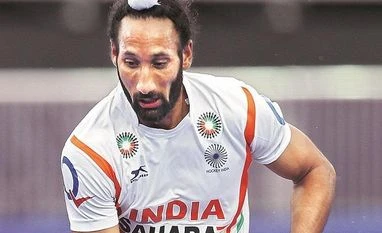
A young Indian team at the Champions Trophy hugely benefited from the return of Sardar Singh
Sardar, employed in his preferred centre-half by Harendra, was canny with his distribution and offered a world-class alternative to Mandeep Singh; Surender and Lakra provided a back-to-front push that helped the team power past Pakistan and Olympic champions Argentina. And youngsters Dilpreet Singh and Vivek Sagar Prasad, superbly complemented by the seasoned duo of S V Sunil and Ramandeep Singh, led the forward line — despite not being precise in front of goal — with energy and imagination.
Nothing, however, makes this performance as significant as the fact that it has come under a homegrown coach. Hockey India, long obsessed with foreign coaches, has often inadvertently deemed Indian ones incompetent for the somewhat complicated job. Imported successes, though, have been few — while Jose Brasa and Roelant Oltmans wrought considerable change, both in style and results, Gerhard Rach and Paul van Ass were calamities Indian fans will want to forget in a hurry.
Harendra, a middling player who had to pay for his coaching badges from his own pocket, is clearly proving his bosses wrong. Winner of the 2016 World Cup with the junior men’s team, Harendra is a hockey-obsessed coach who spends hours developing tactics and studying formations; he embraces technology like no other Indian coach we’ve seen. Most pleasingly, in his limited tenure, he has shown he can unite and inspire players in a way foreign coaches struggled to.
“He is the right man for the job and I hope they stick with him for some time. When we appoint a foreign coach, we highlight stuff like ‘plan’ and ‘process’, but with Indian ones, we expect miracles overnight,” says Carvalho, who was the national side’s last full-time Indian coach, more than a decade ago. “Harendra has done well so far, but we must keep backing him.”
Harendra Singh has shown he can unite and inspire players in a way foreign coaches struggled to
There are, despite reasonable cause for elation, areas where this Indian team can improve. India’s play from penalty corners was chaotic, leading to an embarrassingly low conversion rate that often makes all the difference in World Cups and the Olympic Games — two events where India has remained static in recent years. India trusted Harmanpreet Singh (the first choice), Varun Kumar and Amit Rohidas with the drag flicks, and all looked unconvincing. Which essentially means that a call-up for Rupinder Pal Singh, who watched the Champions Trophy on his telly, looks very likely.
“Issues relating to both direct and indirect conversions from penalty corners must be addressed,” stresses Rasquinha. Carvalho, on the other hand, says that India must focus on field goals. “We’ve always been known for beautiful goals from open play. Forget penalty corners, we must look at improving our passing, switch in play and finishing.” Importantly, both invoke the need for a killer instinct, which would’ve spared us the wastefulness displayed in the final.
And then there is the small matter of finding a backup for P R Sreejesh. The goalie was partially at fault for the opener in the final, but remains the serene monk-like figure that soothes nerves and tempers in the sometimes-disorderly world of the Indian defence. There are occasions when he isn’t the last line, but the only line, of defence.
“Clearly, there is an over-reliance on him. Krishan Pathak and Suraj Karkera are decent keepers but not in the same league as Sreejesh,” says Rasquinha. “Without him in goal, India just doesn’t look the same.”
India’s next big challenge will arrive in the form of the Asian Games, starting in August. A gold medal in Jakarta and Palembang will see India cement a qualifying spot for Tokyo 2020 — something that should be on top of Harendra’s priority list right now. And despite a rapidly improving Pakistan under Oltmans and the usual suspects in South Korea and Malaysia, India will start as heavy favourites in Indonesia. And that tag, unlike the status of the underdog, comes with a lot more pressure.

 "Champions Trophy: Is Indian hockey's latest batch the best in a long while?")












 Connect with us on WhatsApp