Japan opens mass vaccination centres two months before Olympic Games
Japan mobilised military doctors and nurses to give shots to elderly people in Tokyo and Osaka on Monday as the government desperately tries to accelerate its vaccination rollout and curb coronavirus
AP Tokyo Japan mobilised military doctors and nurses to give shots to elderly people in Tokyo and Osaka on Monday as the government desperately tries to accelerate its vaccination rollout and curb coronavirus infections just two months before hosting the Olympics.
Prime Minister Yoshihide Suga is determined to hold the Olympics in Tokyo after a one-year delay and has made an ambitious pledge to finish vaccinating the country's 36 million elderly people by the end of July, despite scepticism it's possible.
Worries about public safety while many Japanese remain unvaccinated have prompted growing protests and calls for cancelling the Games set to start on July 23.
Suga's government has repeatedly expanded the area and duration of a virus state of emergency since late April and has made its virus-fighting measures stricter. But with COVID-19 cases still persistently high, Suga says vaccines are key to getting the infections under control.
At the two mass inoculation centres staffed by Japan's Self-Defence Forces, the aim is to inoculate up to 10,000 people per day in Tokyo and another 5,000 per day in Osaka for the next three months.
People inoculated at the centres on Monday were the first in Japan to receive doses from Moderna Inc, one of two foreign-developed vaccines Japan approved on Friday.
Previously Japan had used only Pfizer Inc, and only about 2% of the population of 126 million has received the required two doses.
Japan began vaccinating health care workers in mid-February while sticking to a standard requirement of clinical testing inside Japan a decision many experts said was statistically meaningless and only caused delay.
Vaccinations for the next group the elderly, who are more likely to suffer serious COVID-19 effects started in mid-April but has been slowed by bureaucratic bumbling including reservation procedures, unclear distribution plans and shortage of medical staff to give shots.
Completion of Japan-developed vaccines is still uncertain, but Japanese government officials hope the approvals Friday of Moderna and AstraZeneca will help speed up the rollout.
Progress is still unclear because of the dire shortage of medical staff who can give shots while they are already busy treating COVID-19 patients. AstraZeneca's plans are also pending due to concerns about its rare blood-clotting in a country known for low confidence in vaccines.
Separately, several local governments, including Aichi in central Japan and Gunma near Tokyo and Miyagi in the north, were also to open their own large vaccination centres on Monday.
(Only the headline and picture of this report may have been reworked by the Business Standard staff; the rest of the content is auto-generated from a syndicated feed.)

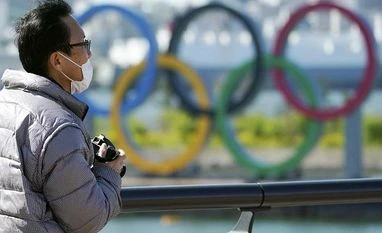 "Japan opens mass vaccination centres two months before Olympic Games")


 Connect with us on WhatsApp