Lack of leadership, foresight have played part in Manchester United's fall

Poor managerial appointments, questionable player recruitment and a lack of foresight have all played a part in Manchester United's appalling decline
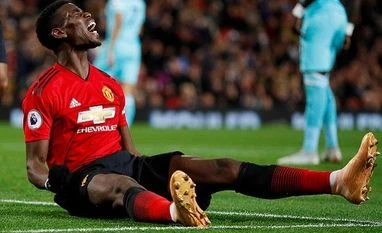
Paul Pogba | Photo: Reuters
Dhruv Munjal
Last Updated : Oct 12 2018 | 10:19 PM IST
If the rumour mill is to be believed, Manchester United manager Jose Mourinho is hoping to lure Zlatan Ibrahimovic back from LA Galaxy in the January transfer window. Mourinho obviously has a thing for such signings; he procured Samuel Eto’o on a short-term deal during his second term at Chelsea, and also signed Emmanuel Adebayor on loan while at Real Madrid. But the Ibrahimovic bet goes far beyond just adding to his squad an experienced striker who can play the role of an impact player off the bench.

Mourinho seems to be secretly hoping that Ibrahimovic’s imposing personality would lift his team and, more pertinently, help him win back the United dressing room. The game against Newcastle last weekend, when United fought back to win from two goals down, might have given the impression of a bunch of resolute players willing to fight for each other and their manager, but the truth remains that the players very evidently no longer trust Mourinho and his methods. One turnaround victory cannot undo the fractiousness that has been the hallmark of the club this season. And despite their own wretchedness, it is difficult to question the players’ mistrust of their manager.

What does Mourinho even stand for nowadays? He has always been seen as a safety-first coach unapologetically proud of his defensive approach. Yet his side has conceded 13 times in eight league games this season, with only Huddersfield, Fulham and Cardiff City doing worse. The latter two, it must be noted, are newly promoted teams. These numbers look all the more grim considering United have between their sticks David De Gea, arguably the best goalkeeper in the world.

Paul Pogba | Photo: Reuters
Misery in the league has been compounded by an early League Cup exit at the hands of lowly Derby County, and an insufferable 0-0 draw against Valencia in the Champions League. How has Mourinho, the charming, sharp-witted football man, fallen on such dreadful times?

For starters, Mourinho, three years into the job, still doesn’t have a clue about what his best XI is. The great teams he built at Chelsea, Inter Milan and Real Madrid had the same group of players turning out every week; Mourinho was, in fact, guilty of not shuffling his pack enough, a dangerous tactic that invariably caused late-season sluggishness and led to too many star players fizzling out.

At United, he likes to tinker with his team and system every week. At West Ham earlier in the season, Mourinho employed a 3-5-2, with Nemanja Matic, Marouane Fellaini and Paul Pogba as his three central midfielders. The back three included the unheralded Scott McTominay, a midfielder asked to perform a defensive role — a decision that boomeranged on the manager. Moreover, the midfield trio’s deep role meant that United offered almost no attacking threat through the middle. While in possession, balls were switched out wide where the two wing-backs, Ashley Young and Luke Shaw, repeatedly disappointed with their crossing. Last season, Mourinho expressed his astonishment at rivals Manchester City shelling out over £100 million on three full-backs. Perhaps he should have made a similar investment.  

The ones he has bought haven’t exactly flourished, either. United’s recruitment, if we allow a little room for exaggeration, has been shocking in recent times — it is quite unbelievable how a club of United’s stature can botch so many signings. Most buys made by other top managers, Pep Guardiola (Manchester City) and Jurgen Klopp (Liverpool) — Kevin De Bruyne, Kyle Walker, Mohamed Salah, Roberto Firmino, Sadio Mane, Virgil van Dijk — have become phenomenal success stories in the last two years. Not a single Mourinho signing deserves that kind of adulation — a sad reflection of the quality of scouting. It also underscores the urgent need for a director of football at the club.

More than plain bad signings, Mourinho’s public criticism of his players, a risky ploy that has worked for him in the past, has not been appreciated by this United squad. How does the second-best defence in the league last season become so brittle all of a sudden? That is because their manager went to the press in pre-season and announced that his centre-backs simply weren’t good enough and that he wanted new recruits.

At all his teams in the past, Mourinho had players who wanted to play for him — John Terry, Frank Lampard, Didier Drogba, Esteban Cambiasso, Marco Materazzi, Michael Essien and Xabi Alonso were all big characters who were more than willing to ensure that their manager almost never ended up failing. At United, that is clearly not the case.

Romelu Lukaku and Alexis Sanchez | Photo: Reuters
This on-field malaise is in stark contrast to United’s commercial success. It continues to be the most valuable football club in the world, having reported record revenue of £590 million just last month. The club, listed on the New York Stock Exchange, hopes to breach the £600 million mark in the current financial year. Even as the modern game is increasingly steered by unchecked commercialisation, it is almost paradoxical how United, with all the resources in the world, are plummeting to such depths.
This irony partly owes to a lack of vision and boldness at the club. Even as clubs such as City, Liverpool and Tottenham have appointed “philosophy”-driven managers and put in place ambitious long-term “projects”, United’s managerial appointments after the retirement of Alex Ferguson have been David Moyes, Louis van Gaal and Mourinho — all somewhat safe choices.

While Moyes and van Gaal both came with their set of problems — Moyes was never really a high-profile candidate and van Gaal was an obstinate coach stuck in the ancient football world — Mourinho, despite his detractors at the time, was seen as a “winning” manager. He certainly has victories to his credit — the League Cup and the Europa League — but the Portuguese increasingly looks like a manager unable to cope with the modern tactical realities of football. The high-risk, adventurous and yet calculated approach of Guardiola and Klopp has started to make Mourinho look, dare we say, rather outdated. This is a manager stuck in the middle: neither does he believe that he has the right personnel to fully implement his defensive methods, nor does his conservative football upbringing allow him to introduce the expansive style that fans have been demanding. His display of a fear of failure has been appalling to watch.

Even if Mourinho were to somehow shed his cagey mindset, the players seem in no shape or form to enthrall us with their football. A whole lot of them have been underperforming for far too long now, which includes big-ticket signings like Pogba, Romelu Lukaku and Alexis Sanchez. United’s best player so far has been left-back Luke Shaw, and even he has already been found out defensively more than once this season.

Mourinho getting the sack at this juncture will hardly solve the problem. His departure will only confirm how the club has failed to learn from the calamitous tenures of Moyes and van Gaal. More than recognising a new manager, the United board must take its time and build consensus on the long-term vision and identity it wants for this football club. For now, Ibrahimovic cannot fix this. Mourinho must learn to do it himself.

One subscription. Two world-class reads.

Already subscribed? Log in

Subscribe to read the full story →
*Subscribe to Business Standard digital and get complimentary access to The New York Times

Smart Quarterly

₹900

3 Months

₹300/Month

SAVE 25%

Smart Essential

₹2,700

1 Year

₹225/Month

SAVE 46%
*Complimentary New York Times access for the 2nd year will be given after 12 months

Super Saver

₹3,900

2 Years

₹162/Month

Subscribe

Renews automatically, cancel anytime

Here’s what’s included in our digital subscription plans

Exclusive premium stories online

  • Over 30 premium stories daily, handpicked by our editors

Complimentary Access to The New York Times

  • News, Games, Cooking, Audio, Wirecutter & The Athletic

Business Standard Epaper

  • Digital replica of our daily newspaper — with options to read, save, and share

Curated Newsletters

  • Insights on markets, finance, politics, tech, and more delivered to your inbox

Market Analysis & Investment Insights

  • In-depth market analysis & insights with access to The Smart Investor

Archives

  • Repository of articles and publications dating back to 1997

Ad-free Reading

  • Uninterrupted reading experience with no advertisements

Seamless Access Across All Devices

  • Access Business Standard across devices — mobile, tablet, or PC, via web or app

Next Story



