A professor and a techie develop tech to prevent railway accidents

Their firm, L2M Rail's 'wheel impact load detection' system captures the wheel signature as a train moves over the instrumented zone of the track and processes data in real-time

L2M Rail co-founders
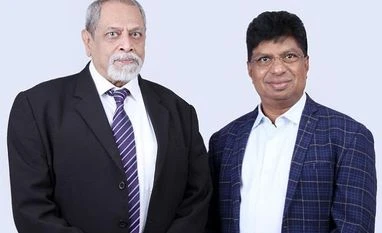
L2M Rail co-founders, Prof S K Sinha (Left) and Sreenivasa Rao Ganapa
Peerzada Abrar Bengaluru
6 min read Last Updated : Oct 19 2021 | 10:32 PM IST
Railway accidents are a major concern in India and worldwide too. As many as 313 consequential train accidents occurred from 2016-17 to 2020-21 and 239 passenger fatalities were reported in India. Consequential accidents are categorised as derailments, manned and unmanned level crossing accidents and collisions. Other such accidents include fire and explosion-related accidents and accidents caused by natural elements. In 2019, falling from a train or collision of trains with people on the tracks accounted for the majority of the railway accident deaths in India, at 75 per cent.

It is this problem that Lab To Market Innovations Pvt Ltd (L2M Rail) is betting big to address. Located at the Indian Institute of Science (IISc) campus in Bengaluru, where it is incubated by the Society for Innovation and Development (SID), L2M Rail has the vision to make ‘railway safe’ by innovating deep science technologies.

The firm has developed an innovative ‘wheel impact load detection’ (F-WILD) system in partnership with the Research Designs & Standards Organisation (RDSO), Indian Railways, Government of India. The F-WILD system captures the wheel signature as a train moves over the instrumented zone of the track and processes data in real-time. 

The processed information is stored in secured servers (private cloud) for all authorised persons to view through a customised GUI (graphical user interface). Information on the critically damaged wheels is communicated through messages to designated authorities. The solution enables the Railway companies to monitor the health of all rail wheels that pass over the ‘WILD-zone’ and assists in condition-based maintenance of rolling stock, thereby reducing the maintenance costs while improving the rolling stock life cycle. Signal Processing and artificial intelligence techniques are used to identify any abnormal wheel signature. Two WILD systems have been installed at two different locations in Bengaluru.

L2M which is backed by IISc in terms of funding was founded by S K Sinha, an academician, and serial entrepreneur Sreenivasa Rao Ganapa in 2016. Sinha is a professor who has served the Indian Institute of Science (IISc), Bangalore for 40 years including as head of the Centre for Scientific and Industrial Consultancy  (CSIC) and Ganapa was also an officer with the Indian Railway Service of Signal Engineers (IRSSE).

L2M  has developed a real-time management system for industrial sidings based on its proprietary Cyber Signalling technology. The entire siding is monitored 365/24/7 through sensors and the data is recorded every second. This solution is a combination of the Internet of Things (IoT) and wireless operation of point machine (WOPM). The applications include real-time viewing of yard operations and wireless operation of point machines. It enables the yard managers to view the yard operations in real-time on their desktops and mobile devices like tablets and smartphones.

Historical data on all train movements and point operations are recorded and stored for historical viewing and analysis.  The solution helps in improving asset utilisation, identifying inefficiencies in the system and aids in decision making. Further, it avoids derailments caused by improper manual point operation in non-interlocked yards. One can view the live movement of a locomotive across the yard

This system is deployed at Railway Industrial Siding at Jindal Steel Works (JSW) in Toranagallu, a village in Karnataka. JSW needed a digital and connected railway system for their modern steel plants operations.

L2M has also developed Axle Counter Plus. It is a technology for counting the number of axles and indicating train direction. It can also provide information about the weight of the wagon, the speed of the train and the type of the rolling stock like engine, loaded and unloaded wagon and coach. The company said the solution employs highly reliable fiber Bragg grating (FBG) based optical sensors, which are immune to all kinds of electromagnetic influences. The data communication is optical, the distance between the sensing nodes and the evaluator does not matter. Also, no electrical power is required by sensing nodes and they continue to count axles even when the tracks are underwater.

Regarding commercialisation of such technology, L2M  and SID at IISc recently formed a partnership with Kerala Rail aimed at enhancing rail safety, especially in vulnerable terrains. The L2M Rail team and IISc have pioneered FBG-based sensing technology, to develop a ‘structural health monitoring system’ (SHMS) that will monitor civil engineering structures of Kerala Rail’s Silverline project. 

The partnership addresses the need for accurate, real-time data regarding the condition of all rail structures. The team uses FBG-sensor technology to ensure the stability and integrity of structures even in vulnerable areas, which comprise a large part of the terrain covered by the Silverline project. Ensuring rail safety in settlement prone locations, flood-prone areas, Earth slip locations, weak soil and heavy rainfall areas, necessitates a shift from conventional manual inspection.  Constant, technology-driven monitoring of both running trains and rail structures offers the ideal solution. Through this partnership, the Kerala Rail Development Corporation aims to ensure the safety of trains on this 530 km, the double-track stretch between Thiruvananthapuram and Kasargod.

Sreenivasa Rao Ganapa, L2M Rail co-founder and an ex-IRSSE officer,  said there is a gap between the critical need for rail safety, and the lack of systems that constantly monitor both trains and railway structures in real-time. He said structural defects are generally identified only when an accident occurs, and preventative identification of weak links could have helped avoid mass casualties, like the recent Mexico metro rail structure collapse. “The potential of FBG sensor technology is immense, and its application is not just restricted to rail monitoring, but to any field that necessitates constant, real-time monitoring and timely warning alerts to identity damages,” said Ganapa.

Through this FBG-sensor-driven monitoring system, rail corporations will be able to embed or attach sensors in rail structures, enabling both on-demand and continuous data, as well as 24/7 warning alerts in case of damage detection. The technology will also be uniquely customised for each structure and location with no standard methodology for the same.

"Rail safety has always been a key concern for us, and while trains are routinely inspected,  structural damage is more likely to go unnoticed during the manual inspection,” said V Ajith Kumar, IRSSE, managing director, Kerala Rail. “We welcome the channelling of innovative solutions towards strengthening Silverline infrastructure and taking preventative action against potential rail casualties.” 

The immense potential of FBG sensor technology has been tapped by IISc researchers in a variety of domains, ranging from aerospace to biomedical. Previously, an L2M Rail-innovated FBG Sensing Technology-based wheel impact load detector was deployed in two locations in Bengaluru, with the support of RDSO of Indian Railways and IISc. L2M has also developed several other IPs for innovative applications of FBG sensing technology to monitor parameters critical to ensure train safety. The start-up aims to take the technology to all parts of the country, thereby transforming the parameters of rail safety.

The opportunity for such innovations is huge. The Indian Railways with over 68,000 route kilometres is the third-largest network in the world under single management. During 2018-19, the Indian Railways carried 120 crore tonnes of freight and 840 crore passengers, making it the world's largest passenger carrier and fourth-largest freight carrier.

One subscription. Two world-class reads.

Already subscribed? Log in

Subscribe to read the full story →
*Subscribe to Business Standard digital and get complimentary access to The New York Times

Smart Quarterly

₹900

3 Months

₹300/Month

SAVE 25%

Smart Essential

₹2,700

1 Year

₹225/Month

SAVE 46%
*Complimentary New York Times access for the 2nd year will be given after 12 months

Super Saver

₹3,900

2 Years

₹162/Month

Subscribe

Renews automatically, cancel anytime

Here’s what’s included in our digital subscription plans

Exclusive premium stories online

  • Over 30 premium stories daily, handpicked by our editors

Complimentary Access to The New York Times

  • News, Games, Cooking, Audio, Wirecutter & The Athletic

Business Standard Epaper

  • Digital replica of our daily newspaper — with options to read, save, and share

Curated Newsletters

  • Insights on markets, finance, politics, tech, and more delivered to your inbox

Market Analysis & Investment Insights

  • In-depth market analysis & insights with access to The Smart Investor

Archives

  • Repository of articles and publications dating back to 1997

Ad-free Reading

  • Uninterrupted reading experience with no advertisements

Seamless Access Across All Devices

  • Access Business Standard across devices — mobile, tablet, or PC, via web or app

Topics :Railways Rail mishapsIoTInternet of Things IoT

Next Story




