Digitising India with high investments in automation

In adoption of emerging technologies, banking and financial services have already set the pace of transformation
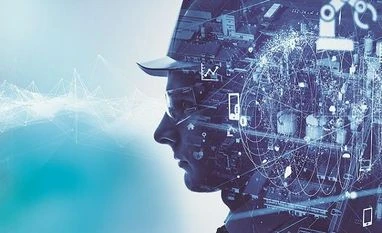
tech, emerging tech, startups, robots, innovation, tech festival, internet, china, start-ups, workers, labour, automation, AI, IoT, next gen
Emerging technologies like bots, artificial intelligence (AI) and machine learning (ML) are becoming a requirement across India’s corporate landscape
Navanwita Bora Sachdev
4 min read Last Updated : Apr 01 2021 | 10:21 PM IST
Lately, Indian consumers have demonstrated an insatiable appetite for all things digital. Be it working, shopping, playing or learning, we’ve learnt to access everything from the comfort of our homes. As an example, India’s fintech adoption rate is 87 per cent, the highest in the world.

India is at the right pace in the race for digitisation. Paired with consumer dem­and for contactless digital accessibility and connected devices and remote working in a post-pandemic landscape, it’s no wonder that India is seeing an uptick in the need to adopt automation. Emerging technologies like bots, artificial intelligence (AI) and machine learning (ML) are becoming a requirement across India’s corporate landscape.

Chatbots galore

Automation is indeed everywhere we look right now in India. Indian enterprises have started creating enhanced experien­c­es for all their customers, which can in­c­l­­­ude external customers, partners or employees.

AI chatbots are proving to be indispensable in enhancing user experience at every point of interaction. For example, the Tata Group has invested in AI platforms in forms of chatbots and voice assistants, handling tasks that were earlier done by human employees.

Chatbot TIA helps the loan procurem­e­nt process for Tata Capital. RICHA hand­l­es customer communication for Tata Ste­e­l, while CARA is the immediate ap­p­­roach for Tata Consult­ancy employees’ queries.

The Mahindra Group’s Club Mahin­dra also employs an AI chatbot called Tri­pper, which interacts with customers with reg­ards to holiday bookings and transactions.

Similarly, the Godrej Group have been utilising a chatbot for their Godrej Jersey Scholarship contest to encourage customers to participate daily.

Automation in banking

In adoption of emerging technologies, banking and financial services have already set the pace of transformation. The industry is investing heavily in hyper-automation and intelligent workload management to automate, simplify and manage computers across enterprises.

Banks aren’t at all behind in adopting AI for ease of workload. State Bank of Ind­ia (SBI) has SBI Intelligent Assistant (SIA), Mumbai-based HDFC has Eva, Bank of Baroda has Baroda Brainy, Andhra Bank has ABHi and Kotak Mahindra has Keya.

ICICI Bank has been deploying software robotics in more than 200 business processes across several functions of the company. In fact, it became the first bank in the country to deploy an AI system at a large scale in multiple processes. Accor­d­ing to a report, the bank has scaled its RPA (robotic process automation) initiative in more than 750 software robots that are dealing with almost two million transactions every day, which constitutes 20 per cent of their transaction volumes.

Post-Covid investments in digital infra and automation

Post-Covid-19, we see a spike in needs for emerging technologies, as in an immediate response to battle the pandemic organisations rushed to democratise IT.

In 2020, some of the largest deals were signed by Indian IT service providers. For example, Infosys gained a US $3.2-billion transaction from Daimler AG, the German automotive manufacturer, according to which the company will transform its IT operating model and infrastructure landscape throughout workplace services, service desk, data centres and networks.

Wipro, too, won a US $700-million deal with Metro AG, the German wholesale firm. Over 1,300 employees from Germ­any, Romania and India are planned to transfer to Wipro according to the deal.

Tata Consultancy Services aims to have only 25 per cent of the workforce in offices at any given time by 2025.

This shows how organisations accelerated investments in digital infrastructure and automation to scale support for remote working.

Automate to deliver instant gratification

As digital transformation advances, latest technologies like CloudDevOps Hybrid multi-cloud deployment have become a game changer that ensures business, technology and security go hand in hand. With this, organisations are able to show a flexibility that makes their digital investments count and protect themselves from cyber risks.

The writer is Editor at The Tech Panda News

One subscription. Two world-class reads.

Already subscribed? Log in

Subscribe to read the full story →
*Subscribe to Business Standard digital and get complimentary access to The New York Times

Smart Quarterly

₹900

3 Months

₹300/Month

SAVE 25%

Smart Essential

₹2,700

1 Year

₹225/Month

SAVE 46%
*Complimentary New York Times access for the 2nd year will be given after 12 months

Super Saver

₹3,900

2 Years

₹162/Month

Subscribe

Renews automatically, cancel anytime

Here’s what’s included in our digital subscription plans

Exclusive premium stories online

  • Over 30 premium stories daily, handpicked by our editors

Complimentary Access to The New York Times

  • News, Games, Cooking, Audio, Wirecutter & The Athletic

Business Standard Epaper

  • Digital replica of our daily newspaper — with options to read, save, and share

Curated Newsletters

  • Insights on markets, finance, politics, tech, and more delivered to your inbox

Market Analysis & Investment Insights

  • In-depth market analysis & insights with access to The Smart Investor

Archives

  • Repository of articles and publications dating back to 1997

Ad-free Reading

  • Uninterrupted reading experience with no advertisements

Seamless Access Across All Devices

  • Access Business Standard across devices — mobile, tablet, or PC, via web or app

Topics :Artificial intelligenceDigitisationDigital transformationDigitalisationAutomationemerging technologyBankingTechnology

Next Story



