Entropik: A start-up that tracks your emotions on smartphones

Entropik currently has two clients in the US and five in India, reports Tech in Asia
Chromo
Chromo. Photo Source: chromo.io
Kylee McIntyre
Last Updated : Jan 06 2017 | 3:15 PM IST
Ranjan Kumar and I sit in an office above the streets of Bangalore. The golden afternoon light on the city outside contrasts with the neat blue-white of the space. I’ve just asked him about feelings, something that’s made him leap out of his chair in excitement and begin drawing on a board.

“I happened to be a teacher for a while in my career, so I love to do whiteboards,” he tells me.

Ranjan heads up Entropik Technologies, a startup which seeks to make interactions between humans and machines seamless. The tech he’s building reads your interactions and gauges how you feel while you’re performing them.

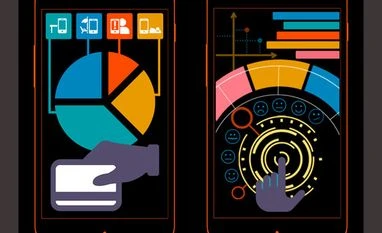
Ranjan’s diagram – called a circumplex model – explains their first product, Chromo.

He marks emotions for me on the graph – happiness, which is intense and positive; relaxation, which is positive but with low intensity; anger, which is negative with high intensity; and boredom, which is negative with low intensity.

Depending on how hard and fast you touch your phone screen, Chromo takes a reading of valence. The product also has motion sensing abilities. It can tell if a user is stationary, walking, or running. The Chromo prototype was released in August last year, and the final product was officially released last month.
 
Ranjan and his team continued to work on the product and build up its accuracy level. 75 percent accuracy is good enough for the market, and Chromo now tests at 84 percent accuracy, he claims.

Entropik currently has two clients in the US and five in India. It charges a monthly fee of $5 per 1,000 users and raised $200,000 in seed funding last month.

“I think the whole investor community and the whole ecosystem around it focuses on traction. Traction is valued a lot more than fundamental research or a patent value,” he says.

The company is working on an augmentation to traditional lead tracking software. Instead of just knowing the number of people who click on an article about Donald Trump, for example, the software will show whether that click was fueled by a positive or negative emotion.

The company is testing how well it works with reactions to articles and videos. When Ranjan conducted tests on reactions to wedding dresses, he used his fiancee as one of the test subjects.

“It was kind of fun,” he chuckles.

This is an excerpt from the article published on Tech In Asia. You can read the full article here.

One subscription. Two world-class reads.

Already subscribed? Log in

Subscribe to read the full story →
*Subscribe to Business Standard digital and get complimentary access to The New York Times

Smart Quarterly

₹900

3 Months

₹300/Month

SAVE 25%

Smart Essential

₹2,700

1 Year

₹225/Month

SAVE 46%
*Complimentary New York Times access for the 2nd year will be given after 12 months

Super Saver

₹3,900

2 Years

₹162/Month

Subscribe

Renews automatically, cancel anytime

Here’s what’s included in our digital subscription plans

Exclusive premium stories online

  • Over 30 premium stories daily, handpicked by our editors

Complimentary Access to The New York Times

  • News, Games, Cooking, Audio, Wirecutter & The Athletic

Business Standard Epaper

  • Digital replica of our daily newspaper — with options to read, save, and share

Curated Newsletters

  • Insights on markets, finance, politics, tech, and more delivered to your inbox

Market Analysis & Investment Insights

  • In-depth market analysis & insights with access to The Smart Investor

Archives

  • Repository of articles and publications dating back to 1997

Ad-free Reading

  • Uninterrupted reading experience with no advertisements

Seamless Access Across All Devices

  • Access Business Standard across devices — mobile, tablet, or PC, via web or app

Next Story



