A simple insight into the genome composition of human beings is ushering in a new era of medicine and healthcare. Scientist have, over the past two decades, figured out that a person’s genetic makeup is the key to understanding, among other things, the diseases he may acquire in the future, the best suited nutritional foods, medication that will work, and even potential illnesses his or her offspring may acquire.
India certainly did not have the early mover advantage in this area, but there has been a renewed interest in this space of late, mostly driven by start-ups and research bodies that are taking strides in the new science. Couples in India are going for gene sequencing to better plan for ailments, while mothers are getting pre-natal testing done to determine the health of unborn babies.
Sports, too is embracing genomics. The Indian Cricket team recently allowed gene testing of its players to better prescribe nutrition and handle injuries in a targeted, personalised manner. About 80 per cent of cancer patients today go for gene sequencing as the first step of treatment and diagnostics, while some people are getting their genes studied only to find out their ancestry. Gene testing in plants (and agriculture), where research is much more advanced, is a different story altogether.
The ecosystem in India consists of research labs that are undertaking gene research for big pharma companies, and start-ups that are bringing some of the benefits of genomics directly to consumers. A case in point is Gene Box, a Mumbai-based start-up that prescribes personalised diet and fitness through a gene test. So does Mapmygenome, a company out of Hyderabad. Then there are a dozen companies like MedGenome and SciGenome that carry out gene research on medicine discovery for pharma companies, and work as select few labs that conduct gene tests recommended by doctors. Another area springing up is technology start-ups like Ganit Labs in Bengaluru, which are bringing new technologies like AI and big data to gene sequencing processes.
As an industry, gene sequencing runs on data. The greater the amount of data on a human genome, the better the analysis, leading to superior results. With that in mind, various efforts to map genomes of Indians, considered one of the most heterogenous societies, is underway.
Nanyang Technological University, Singapore, recently launched an effort to sequence genes of 100,000 Asians, including 50,000 Indians. A simultaneous effort is being led by biotech major Regeneron and Global Gene Corp to build one of the largest pools of Indian genomic samples.
Sixty-six years after molecular biologists Francis Crick and James Watson gave us the famous double helix structure of DNA, scientists are now closer to understanding the molecule that carries our genetic makeup. Research in the area over the last two decades has not only told us more about the human anatomy — how the genetic makeup leads to physical attributes — but is also behind breakthroughs in medicine discovery, in some cases for diseases that did not have a cure earlier.
There are one trillion cells in the human body. Cells have nuclei; nuclei have thread-like structures called chromosomes; and chromosomes have DNA, or deoxyribonucleic acid. In the past 20 years, we have identified that DNA is made up of four nitrogenous compounds abbreviated as ATCG (adenine, thymine, cytosine and guanine). The combination of these compounds, unique to each individual, determine the genetic makeup.
Mapping the combination of these ATCGs is called gene sequencing. This data (and there are over 3 billion ATGCs in a human cell) allows biologists to identify mutations (patterns in parts of DNA) responsible for a set of attributes.
Sequencing of human genome was successfully carried out for the first time under The Human Genome Project in the US in 1990s. The US government funded project was launched to ‘sequence’ and ‘identify’ all three billion chemical units in the human genetic instruction set, find the genetic roots of disease and then develop treatment. The project was completed in 2003 with the first computerised draft of human genome presented in April that year.
The project took over $3 billion and 13 years to sequence ‘one’ genome. However, with technology advancements, faster computers and things like big data have brought down the cost and time-taken considerably.
“The cost today has come down to $1,000 and the task can be done in one week,” says Vedam Ramprasad, a microbiologist and chief operating officer at Medgenome Inc., a gene sequencing firm. “In the next one year, people are going to get this done in $100.”
With gene sequencing getting cheaper, its applications and access have grown wider.
“Gene therapy may disrupt the sector by offering customised, targeted patient treatment… While adoption is still low due to availability, insights from human genetics and precision medicine have transformed healthcare, bringing value through innovative biotechnology,” research firm Deloitte said in ‘2018 Global Life Sciences Outlook’, an annual report on the state of biotechnology and life sciences sector.
Traditionally, a chemistry-leaning approach is followed for drug discovery. A bunch of compounds known to produce therapeutic results are tried on a set of subjects. These compounds are narrowed down and re-tested till one of them gives the desired outcome, without any side-affects.
With gene sequencing, the process is reversed. Compounds are identified that work on a particular gene set (in the larger DNA thread). The patient’s gene sequencing is done, and the medicine corresponding to that gene type is given to the patient. In other word, this is more of a ‘targeted’ treatment. "While it is still budding in other areas, targeted diagnostics has picked up in Oncology," says Ramprasad of Medgenome.
“Gene therapy will continue to play a significant role in the rare disease space. Since approximately 80 per cent of rare diseases are of genetic origin, gene therapy is a rapidly emerging treatment, with several pharmaceutical and biotech companies testing gene therapies to treat various orphan diseases… According to the Alliance for Regenerative Medicine, currently 34 gene therapies are in the final US FDA approval stage and 470 are in initial clinical trials,” the Deloitte report read.
DNA is the bed of all the information of an organism. By studying the genes, scientists can determine the ailments that may happen in future. The risk of cancer, diabetes or arthritis, which is probably hereditary, can now be seen coming way before time.
Gene sequencing has come to be used by a section of elitists who like to have their partners tested before getting married. Such a test would make them aware of potential health risks in future. Pregnant mothers, on the other hand, are going in for a procedure called non-invasive prenatal screening (NIPC) that determines the baby’s genetic health as early as the ninth month of pregnancy.
Some kinds of genetic mutations are favoured in sportsmen. This gives them better agility, strength and endurance than others. It is now a practice to review the genetic makeup of budding sportsmen, especially while picking the squad to train for a major tournament. China does that. Recently the Indian Cricket team also prescribed gene tests for its players, to gather information to determine each one’s nutrition and training needs.
Genomics is also the centre piece of forensic science. India recently passed a bill allowing a competent authority to record DNA information of convicts and suspects in a DNA bank of sorts, for use in future cases. The bill awaits a nod from the Upper House of Parliament.
More genes, more solutions
Precision medicines need data, in this case completely sequenced DNA information for as many people as possible. Currently only two per cent of the world’s population is genetically mapped. Individual efforts are also underway in this regard. For example, Finland early this month called for the collection of biological samples from 500,000 persons, or 10 per cent of its population. This data will be the “springboard for better diagnostics and new therapies.”
Unlike Finland, which is largely a homogenous society, India has 4,000 anthropological groups. In other words, 4,000 sets of people with different ancestry and gene pool, make it a herculean task to map all of India’s 1.3 billion population.

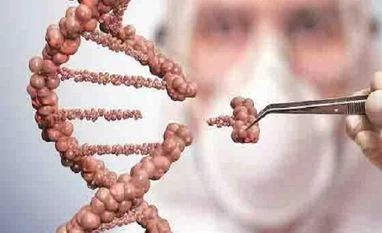 "Genomics: A new area of healthcare that helps predict diseases in advance")











