Koo has a 'stronger network' than its bigger rival Twitter, says study

The finding was made in a study titled 'Koo: The new king? Characterising India's emerging social network'
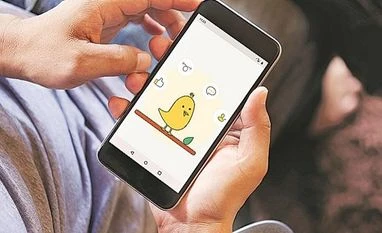
Koo app, social media
A major spike in users was seen around 10 February 2021, when the Ministry of Electronics and Information Technology posted a tweet promoting Koo, and many prominent government figures started joining the platform
Neha Alawadhi
4 min read Last Updated : Mar 29 2021 | 11:53 PM IST
India's local language microblogging platform Koo has stronger networks compared to Twitter, a new study has found. Currently available in seven languages, Koo hit headlines last month when ministers and political leaders said they were going to move to the country's homegrown microblogging platform.

"The Koo network has a noticeably high local clustering coefficient of 0.561, that represents how well connected the neighbourhood of a vertex is. This indicates a strong modular structure in the network, presumably due to Koo only catering to audiences from a single country. In contrast, Twitter, which caters to worldwide audiences, only had an average local clustering coefficient of 0.072 during its early years in 2009, indicating much weaker communities," said the study, titled "Koo: The new king? Characterising India's emerging social network". 

According to network scientist Jérôme Kunegis, clustering is an important property of social networks, as people tend to have friends who are also friends with each other, resulting in sets of people among which many common people existHe further explains that the clustering coefficient is a real number between zero and one that is zero when there is no clustering, and one for maximum clustering.

The current study was undertaken by students Asmit Kumar Singh, Chirag Jain, Rishi Raj Jain, and professor Ponnurangam Kumaraguru from Indraprastha Institute of Information Technology, Delhi and Jivitesh Jain and Shradha Sehgal from the International Institute of Information Technology, Hyderabad, examined 4 million users on Koo.  

The study found that the app saw an influx of users in August 2020, around the time it won the Aatmanirbhar Bharat App Innovation Challenge Award. However, of the 4 million users that the study analysed, 1.9 million joined Koo in the first two months of 2021 alone .The app, which was earlier called "Ku Koo Ku," claims to have a total of 4.7 million users as of this week. 


The major spike in users was seen around 10 February 2021, when the Ministry of Electronics and Information Technology posted a tweet promoting Koo, and many prominent government figures started joining the platform. 

ALSO READ:  Startup A-listers buy out Chinese investor Shunwei's stake in Koo

Gender dynamics

Of the 18.1 per cent of the users who specified their gender on their profile on Koo, 92.1 per cent, or 699,083, identified as male, while only 7.5 per cent, or 58,996, identified as female and 0.36 per cent or 3,236 identified as others. 

However, female users were found to be more active, in terms of the number of average likes at 103.6 and average rekoos  at 21.7. Female users also, on average, have more followers at 632.9 compared to male users with an average of 117.0 followers and users identifying with the other category with an average of 283.45 followers. 

Language dynamics

The study examined 75,091 user profiles with location information, and Bengaluru was the most frequently mentioned city with 141,469 users. Notably, 44.2 per cent users use Hindi while 51.2 per cent post content in the language, followed by English language users at 23.8 per cent and 25.9 per cent of content are the most popular languages. 

Top mentions and likes
 
Top mentions of the profiles on the platform were not all well known names, unlike Twitter. These were television news channel Republic, followed by Minister of IT and telecom Ravi Shankar Prasad, profiles called kisanektamorcha, ErpENlk_BArt, piyushgoyal, mayank, and leledirect.com. 

Another study conducted by University of Michigan's Arshia Arya, Dibyendu Mishra, Joyojeet Pal in February, called "Koo and the attempt to create a ‘nationalist Twitter’," had examined the political and network effects of the new platform. 

"It is also important that while Koo is currently dominated by accounts strongly aligned with the BJP, this was not the case earlier. This new-found homophily in the Koo crowd arguably served as a driver of early engagement, though in the longer run, this risks becoming an echo chamber," the study's authors had noted. 

One subscription. Two world-class reads.

Already subscribed? Log in

Subscribe to read the full story →
*Subscribe to Business Standard digital and get complimentary access to The New York Times

Smart Quarterly

₹900

3 Months

₹300/Month

SAVE 25%

Smart Essential

₹2,700

1 Year

₹225/Month

SAVE 46%
*Complimentary New York Times access for the 2nd year will be given after 12 months

Super Saver

₹3,900

2 Years

₹162/Month

Subscribe

Renews automatically, cancel anytime

Here’s what’s included in our digital subscription plans

Exclusive premium stories online

  • Over 30 premium stories daily, handpicked by our editors

Complimentary Access to The New York Times

  • News, Games, Cooking, Audio, Wirecutter & The Athletic

Business Standard Epaper

  • Digital replica of our daily newspaper — with options to read, save, and share

Curated Newsletters

  • Insights on markets, finance, politics, tech, and more delivered to your inbox

Market Analysis & Investment Insights

  • In-depth market analysis & insights with access to The Smart Investor

Archives

  • Repository of articles and publications dating back to 1997

Ad-free Reading

  • Uninterrupted reading experience with no advertisements

Seamless Access Across All Devices

  • Access Business Standard across devices — mobile, tablet, or PC, via web or app

Topics :Social MediaSocial media appsTwitter

Next Story



