Like human beings, man-made artificial intelligence also has a dark side

Though AI technology is perceived to be the next big thing, it also seems to have implications that go beyond its generic notion of making life easier for humans
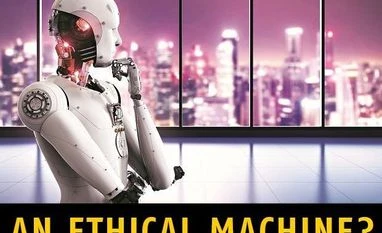
Artificial intelligence
BS Web Team New Delhi
Last Updated : Jan 03 2019 | 12:33 PM IST
Artificial Intelligence (AI) is one of the emerging concepts shaping the world of technology today. From analysing big data to powering autonomous vehicles, this technology has created new avenues for humans to experiment and explore. Though the AI is perceived to be the next big thing in technology, it also seems to have implications that go beyond the generic notion of it making life easier for humans. 

A research by Stanford and Google has revealed that a machine learning agent that was meant to form street maps from aerial images was found to be hiding information in a clandestine manner to use it later stealthily. This incident came to light when researchers were working on improving the process of turning satellite imagery into Google Maps’ Street View feature, according to a news report in technology and start-up news portal the Tech Crunch.

ALSO READ: Facebook shuts down AI system after creating its own language

This is not the first time that an AI-based program has been found to learn new tricks to improvise its work beyond the purpose it was designed for. Last year, Facebook AI Research Lab (FAIR) also had to shut down chatbots powered by the social media giant’s AI-engine after they appeared to have been conversing in a language that only they understood.

The two examples above show that AI has, along with other things, also imbibed a dark side from humans. Though it is designed to work on data sourced from humans, its basic nature to learn, adapt and improvise makes it change its course from what it is designed for to what it is capable of —  that can be horrendous and scary.

The AI is also seen to have inherited a sense of bias from humans. In 2016, an investigation by ProPublica, a US-based non-profit organisation, found that an AI-based software (COMPAS) used by judges in some US states to calculate risk score of a person re-committing a crime again, was biased against people of colour.

Such biases can also be seen in today’s smartphones with AI-driven beauty mode, which brightens the frame and considers white tone as beautiful. Maybe this is how the program is designed to work, but there is no denying that the technology has biases, just as humans do.

One subscription. Two world-class reads.

Already subscribed? Log in

Subscribe to read the full story →
*Subscribe to Business Standard digital and get complimentary access to The New York Times

Smart Quarterly

₹900

3 Months

₹300/Month

SAVE 25%

Smart Essential

₹2,700

1 Year

₹225/Month

SAVE 46%
*Complimentary New York Times access for the 2nd year will be given after 12 months

Super Saver

₹3,900

2 Years

₹162/Month

Subscribe

Renews automatically, cancel anytime

Here’s what’s included in our digital subscription plans

Exclusive premium stories online

  • Over 30 premium stories daily, handpicked by our editors

Complimentary Access to The New York Times

  • News, Games, Cooking, Audio, Wirecutter & The Athletic

Business Standard Epaper

  • Digital replica of our daily newspaper — with options to read, save, and share

Curated Newsletters

  • Insights on markets, finance, politics, tech, and more delivered to your inbox

Market Analysis & Investment Insights

  • In-depth market analysis & insights with access to The Smart Investor

Archives

  • Repository of articles and publications dating back to 1997

Ad-free Reading

  • Uninterrupted reading experience with no advertisements

Seamless Access Across All Devices

  • Access Business Standard across devices — mobile, tablet, or PC, via web or app

Next Story



