Behind the 'new' India

Persistent unemployment has forced people to reluctantly stick to farming
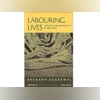
Labouring Lives: Industry and Informality in New India
Sarthak Choudhury
5 min read Last Updated : Nov 01 2023 | 10:17 PM IST
Labouring Lives: Industry and Informality in New India 
Author: Archana Aggarwal
Publisher: LeftWord Books
Pages: 172
Price: Rs 275

Also Read

Most of the country is in the middle of festivities, and like most Bengalis, I celebrated Durga Puja last week. And like most Bengali households, sharing gifts is as synonymous to the “pujos” as turkey is to Thanksgiving. Among the gifts this reviewer received was a jacket from Zara. What caught my eye was the “Made in India” tag. The price, which matched that of an imported jacket, also caught my eye. To understand why a local product carried an exorbitant global price tag, I considered giving Archana Aggarwal’s book a shot.

Citing a 2017 BBC documentary, Ms Aggarwal traces the journey of jackets like this one — a trip that would make most of us envious. “The material used to create the garment came from lyocell — a sustainable alternative to cotton. The trees used to make this fibre come from Europe. These fibres are shipped in Egypt, where they were spun into yarn. The yarn was sent to China, where it was woven into a fabric. This fabric was then sent to Spain, where it was dyed. The fabric was then shipped to Morocco to be cut into various parts of the dress and then sewn together. After this, it was sent back to Spain, where it was packaged and then sent to any of 93 countries [including India] where Zara has shops,” she writes.

This is a familiar trajectory in the global fast fashion industry that thrives in increasingly wealthy emerging markets such as India, which also plays a key role in manufacture.  But it is the “who” and “what” behind the glamour and glitz of the retail store that Ms Aggarwal explores in her book. For a subject such as economics that is often dominated by techniques and theories over conversations and insights, Ms Aggarwal delves into what goes on behind the changing goalpost of a $5-trillion economy using two industries with which a non-economist or layman would be familiar — automobiles and garments. 

She divides the book into six chapters, detailing facets of the people who put in the hours to make the products India’s increasingly prosperous middle class casually uses and discards. The first chapter looks at the situation post-independence and the country’s gradual shift from agriculture to the services sector. She traces how India’s journey was atypical to Western nations. Where these economies saw a gradual shift from agriculture to services, via manufacturing, India leapfrogged manufacturing to jump to services from agriculture. She also backs her statement with data, showing how manufacturing has remained stagnant over the years. Ms Aggarwal also speaks to two industrial workers from the auto and garment sectors, noting how despite having largely different career trajectories, both seem to be at the point of no return.

In the second chapter, Ms Aggarwal leads readers through the garment and the automobile industry clusters in the National Capital Region (NCR). She explains how both these industries became dominant in India. She then moves on to explain how workers in both these industries are hired and their working conditions, which are mostly tedious and “robot like”. She also travels across Kapashera and Manesar to give us a glimpse of the workers’ precarious living conditions, often weaving data with their personal anecdotes.  

Through a series of workers’ anecdotes, the author shows how the concept of minimum wages has remained just that — minimal — even though these workers produce products that are sold under some of the biggest and best-known brand-names in the world. She explains how the idea of minimum wages was introduced, and why after so many years, it has been stagnant.  The chapter is a little long but it illustrates well how real wages impact the lives of people in both industries, and how several legislations haven’t brought workers much respite.

Her point is substantiated by a number of reports, most recently the Periodic Labour Force Survey, which shows that average salary growth in urban areas fell 4.9 per cent in 2022-23, from 8.3 per cent in 2011-22. The report showed the discrepancy in wage growth between people in managerial roles (19.6 per cent) and service or sales workers (1.4 per cent).

The past 18 months has been a tumultuous time for the formal job market. Layoffs in India and across the world have been rampant across sectors with those being unaffected by the layoffs complaining about working conditions. In the fourth chapter, Ms Aggarwal compares the condition of workers in NCR to their forefathers during the Industrial Revolution, providing a glimpse of the increasing precarity of jobs, the persistent domination of informalised labour, and the lack of safeguards for these workers.

Tracing the origins of various labour laws, Ms Aggarwal provides examples to make the point that laws that were meant to protect people have been turned against them — and the government has acted as a mute spectator in a number of cases. 

And finally, to the latest trend, of young people being forced into the insecurities of gig work for lack of meaningful employment. Persistent unemployment, she shows, has forced people to reluctantly stick to farming as “the piece of land is the only social security they have”. As she argues, without better security for the vast army of unskilled and informal sector workers, the idea of reaching a $5 trillion army is a hollow achievement.

One subscription. Two world-class reads.

Already subscribed? Log in

Subscribe to read the full story →
*Subscribe to Business Standard digital and get complimentary access to The New York Times

Smart Quarterly

₹900

3 Months

₹300/Month

SAVE 25%

Smart Essential

₹2,700

1 Year

₹225/Month

SAVE 46%
*Complimentary New York Times access for the 2nd year will be given after 12 months

Super Saver

₹3,900

2 Years

₹162/Month

Subscribe

Renews automatically, cancel anytime

Here’s what’s included in our digital subscription plans

Exclusive premium stories online

  • Over 30 premium stories daily, handpicked by our editors

Complimentary Access to The New York Times

  • News, Games, Cooking, Audio, Wirecutter & The Athletic

Business Standard Epaper

  • Digital replica of our daily newspaper — with options to read, save, and share

Curated Newsletters

  • Insights on markets, finance, politics, tech, and more delivered to your inbox

Market Analysis & Investment Insights

  • In-depth market analysis & insights with access to The Smart Investor

Archives

  • Repository of articles and publications dating back to 1997

Ad-free Reading

  • Uninterrupted reading experience with no advertisements

Seamless Access Across All Devices

  • Access Business Standard across devices — mobile, tablet, or PC, via web or app

Topics :BOOK REVIEWDurga PujagarmentsFashion

Next Story



