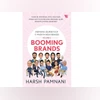
Booming Brands: Inspiring Journeys of 11 ‘Made in India’ Brands. Vol 2
Author: Harsh Pamnani
Publisher: Westland
Pages: 256
Price: Rs 599
We don’t celebrate our businesses enough. In Indian B Schools, we discuss case studies on Nike and Apple, GE and IKEA, Pepsi and Coke. The reasons are many. For one, the American companies have made sharing information a part of their corporate brand-building culture. Companies get B Schools to write cases about them, sharing all kinds of information freely. For another, American, and several European companies believe that publication of cases and books will enhance the stature of their companies, help the company attract better talent and generate other positive spinoffs. In contrast, Indian companies, with exceptions such as the Tata Group, have been wary of sharing information and corporate history.
There has been some noticeable change in the past 10 or 15 years. More and more Indian B Schools are venturing into writing cases on Indian companies; they still have a tough task getting a final sign-off. Another welcome change has been the flourishing art of corporate history books, some of them coffee-table-like, bordering on hagiography. There are also several books that share highly confidential trade secrets. In the last few years, this reviewer has enjoyed books about the founder of Sun Pharma, a book by Subhash Chandra of Zee TV, S Ramodarai’s The TCS Story, Ajit Balakrishnan’s Wave Rider, Harsh Mariwala’s The Making of Marico, and books on companies such as Indigo, Royal Enfield, Titan, LIC, IRCTC, Flipkart, etc. But the list is too short for a country that has a rich history of business.
So it is wonderful that a young qualified management professional like Harsh Pamnani has taken upon himself the task of writing about “Booming Brands” that are rooted in Indian soil. The latest in this series is the book that captures the birth and growth stories of 11 “Made In India” brands. You will get to learn about PolicyBazaar, Zoomcar, Josh Talks, Epigamia, ShareChat, BigBasket, Hidesign, Super 30, Quikr, OYO and Portea. Some of these brands are media darlings and have been written about and quoted. But some, such as Hidesign, which is ubiquitous with its airport stores, are not that widely written about.
The author has collected published information about each of these brands and then has had detailed interviews with each of the founders of these companies. The book is presented as 11 chapters, one chapter for each company. Almost all the chapters are of equal length. Starting from how the name was thought of (the name Portea comes from a Brazilian flower but it is also supposed to stand for “port of call”), to the struggles to make the idea work, to funding rounds, to future strategy, each chapter gives us a quick history of the company.
What is interesting is the way the author has managed to try and distill the business lessons from each of the 11 brands. Some of the lessons resonate across many of the stories: The need for resilience to bounce back after each rejection; understanding and connecting with customers; constant innovation as a part of DNA; looking at market creation and not just market sharing; the constant use of technology to become more efficient; importance of customer feedback; importance of monetisation and path to profits; attracting and building a team that is ready to do the long haul; starting small, perfecting that and then thinking big and the need to never stop learning. You will find some of these reflected in many of the success stories. But not all the business lessons are the same. It is here that the author has spent time digging into the secret sauce of each company to explain what makes them successful.
Almost all the brands covered in the book were born in the last decade, with the possible exception of Hidesign. So you will see how most of them use technology and analytics to understand the customer and make their operations more efficient. Only two of the brands are what you may call product brands: Epigamia and Hidesign. Most of the brands such as BigBasket PolicyBazaar, ZoomCar, Josh Talk, Quikr, Portea, and Oyo are digital natives that are moving from web-based to the app-based smartphone economy. There is one brand that is from the social sector and that story, Super 30, is indeed one of my favorites (I admit I am yet to see the movie but after reading that book, the movie joins my “to see” list).
The story of Hidesign left a deep impression. While I have several Hidesign products, I did not know that the brand had started out as an exporter before actively selling to Indian customers. The fact that it was born in Pondicherry was known to me, but I did not know that the founder is a big follower of the sayings of Shri Aurobindo and the Mother.
If I were to quibble about one thing, it is the relative absence of financial information. I wish the author had presented a five- or 10- year top line and market share numbers. That would have made this book more complete and B School-ready. I would also like to see more social sector brands, more B2B brands and more product brands featured in the next volume of Booming Brands. Pick up the book and get inspired to start your own journey, or apply some of the lessons to your business.
The reviewer is a bestselling author of eleven books on topics ranging from branding, advertising and leadership. His latest book, All The World’s A Stage, is a personal branding story