Home / Book / Caroline Fraser uncovers a second, darker perp behind US serial killings
Caroline Fraser uncovers a second, darker perp behind US serial killings
Studies are beginning to link childhood lead exposure with aggression, psychopathy and crime. Fascinatingly, all the serial killers in Murderland lived near areas with high lead levels in the air
4 min read Last Updated : Jun 26 2025 | 7:23 PM IST
Don't want to miss the best from Business Standard?
Murderland: Crime and Bloodlust in the Time of Serial Killers
by Caroline Fraser
Published by Fleet
480 pages ₹2,089
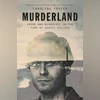
I had heard the term “serial-killer” way before I knew its definition. The US Department of Justice defines it like this: Anyone who has committed two or more murders on separate occasions is deemed a serial killer. Ted Bundy, whose face appears on the cover of Murderland: Crime and Bloodlust in the Time of Serial Killers, murdered dozens of women.
Bundy was just one of many such serial killers who roamed the streets of America during the 1970s and 1980s, preying on women. Why were a number of these killers connected with the Pacific Northwest, home to Caroline Fraser, the author of Murderland? Why did this phenomenon of the serial killer rise with such intensity during a certain time period and then, just as suddenly, come to an end? These are the questions that Pulitzer Prize winner Fraser asks in her latest book. She also supplies her unexpected and thought-provoking answer — lead poisoning.
Ms Fraser takes her readers to Tacoma and its surroundings in the northwest, an area polluted by the smelting industry for decades. With lead and arsenic among the main components of the deadly emissions released by smelter smokestacks, and leaded gasoline further increasing atmospheric lead levels, there was little chance for locals in the region to escape the toxic effects of these fumes. The people, and especially children, grew on a steady diet of lead and arsenic, and Ms Fraser traces a connection between the presence of high levels of such elements in human beings with severe mental development issues, ranging from irritability to “dreams bordering on hallucinations”. Studies are beginning to link childhood lead exposure with “aggression, psychopathy and crime,” she writes. Fascinatingly, all the serial killers she talks about in Murderland, such as Ted Bundy, Warren Leslie Forest, Dennis Rader, Richard Ramirez and Israel Keyes (whose ideal was Ted Bundy) spent years living in and around places with high lead concentration in the air.
The criminals Ms Fraser investigates here are two-fold. There are the serial killers, of course. But there’s also the smelter industry, particularly the American Smelting and Refining Company, whose crimes Ms Fraser sets out to investigate in the book. Ms Fraser doesn’t let the serial killers off the hook. But she goes beyond the descriptions of their many gruesome crimes and victims (and the list is long and makes harrowing reading) and brings to light the equally heinous crimes of an industry that knowingly, and sometimes in collusion with those in power, helped create these monsters. No surprise, the industry steadfastly denied harming the environment or the people for as long as it could, before it was finally shut.
Murderland can be read as a true crime book, but it would be a disservice to read it as just that. It blends true crime with reportage and memoir. Interwoven with the world of killers and corporations is a strand of Ms Fraser’s childhood and her years under a strict Christian Scientist father. Ms Fraser moves to-and-fro between these universes, situating the killers and the killings within a framework of other contemporary happenings, things with an impact at either a micro or macro level. In a single chapter, for instance, in snapshot-like descriptions, she tells us how Frank Herbert based the world of Dune on Tacoma; of the attack on 20-year-olds Lisa Wick and Lonnie Trumbell; the death of the brother of Ms Fraser’s friend in Vietnam war; the assassination of Martin Luther King Jr; the fact that Bundy was working at Safeway on Queen Hill from April to July 1968; the launch of Apollo 11, and the suicide of her friend’s dad who also blew up his house.
The wry tone Ms Fraser employs underlines the callousness of both kinds of criminals. For instance, she writes of a time when Bundy leaves one of his crime sites in panic, disposing of whatever incriminating material he has, and appends it with the sentence, “No worries — he’ll be back.”
Murderland is not for a casual true-crime reader. Eschewing any pretence of being a linear narrative, this book is research-intensive, as its lengthy “Notes” section testifies. It looks at past events from a different perspective and ends up telling a fascinating story.