A K Bhattacharya's third book on India's FMs captures the post-reform era

Typically, by the third sequel, authors tend to lose energy, but not A K Bhattacharya. He enjoys reporting the joys and pains of India's finance ministers too much
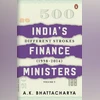
India's Finance Ministers III: Different Strokes (1998–2014) by A K Bhattacharya
India’s Finance Ministers III: Different Strokes (1998–2014)
Laveesh Bhandari
5 min read Last Updated : Jun 17 2025 | 11:03 PM IST

Don't want to miss the best from Business Standard?

India’s Finance Ministers III: Different Strokes (1998–2014)
by A K Bhattacharya
Published by Penguin Business
556 pages ₹999
    Titled India’s Finance Ministers: Different Strokes (1998-2014), this volume does exactly what the previous two in the same series did, but over some of the most interesting years of modern Indian economic history.  The style remains the same: Non-judgemental and clinical, yet not critical.  Perhaps there would be another where the author does not shy away from judgement or critique, but for now, he is simply a raconteur and not an analyst.  
The period 1998 to 2014 is unarguably critical; the reforms of the early 1990s were yielding significant benefits; India was on a substantially higher growth path, government revenues were increasing, and successes in telecom, road building, and education, to name a few, were unfolding. Yet, employment growth was a serious concern. Unlike in the past, only four finance ministers held the position during this period — Yashwant Sinha, Jaswant Singh, Pranab Mukherjee and P Chidambaram.  
Curiously, a significant part of the volume is devoted to Yashwant Sinha and is spread over two large-ish chapters, the first covering 1998 to 1999, and the second, 1999 to 2002. There are some interesting anecdotes there, but I fail to understand the need to devote so much to those years. I would have tightened that part and included the period 2014 to 2024, with Narendra Modi as Prime Minister and first Arun Jaitley, and later Nirmala Sitharaman, as finance minister.  What a sparkler of a volume that would have been!  Perhaps there is a Volume 4 on the anvil. 
No doubt, Yashwant Sinha’s role in sustaining post-reform progress, deepening growth, and keeping the naysayers at bay must be acknowledged. What must also be acknowledged is the support he received from L K Advani and Atal Bihari Vajpayee, knowing fully well his economic instincts were fairly different from theirs and also various lobbies within the Bharatiya Janata Party-Sangh combine. And of course, coalition politics of the day would not have made it any easier. The role played by Yashwant Sinha in many institutional developments, including creating the momentum for the Fiscal Responsibility Act, are well recorded. 
Jaswant Singh took over from Yashwant Singh in 2002. Apart from the name, perhaps the only similarity between the two was in the degree of discomfort the rank and file of the BJP had with both.  I also suspect that had the Swatantra party been around, Jaswant Singh would have been in it.  Unlike Yashwant Sinha, the ex-bureaucrat turned institution builder, Jaswant Singh, the politician with a feudal background, had less faith in the power of bureaucracy and more in achieving collaborative outcomes.  His efforts on tax terrorism, cooperative federalism, reduction of interest burden, external debt, and so on all suggest that though not a man of details, this FM was a reformist as well. 
The surprising loss of the 2004 elections brought in past reformers P Chidambaram as finance minister and Manmohan Singh as Prime Minister.  As would have been expected, the reform process continued, albeit at a slower pace.  It would have been good if the author had compared the two regimes, P Chidambaram-NarasimhaRao and P Chidambaram-Manmohan Singh.  Nevertheless, there is much meat in this section.  The Fiscal Responsibility and Budget Management Act, a continuation of Vajpayee’s efforts on the social sector, including Sarva Shiksha Abhiyan and rural roads, start of the rural employment guarantee scheme and multiple reforms related to taxation are important landmarks. Of course, there are many other efforts that did not yield much, including those on public sector disinvestment, subsidy reform, manufacturing competitiveness, to name a few.  
And then came Pranab Mukherjee in 2009. He stayed till 2012 when he became President. Unlike all other FMs, Pranab Mukherjee belonged to the pre-1991 era of state-driven economic policy, which also initially motivated his disinclination to be a finance minister under Manmohan Singh.  Circumstances, combined with Sonia Gandhi, determined otherwise.  But his superior political instincts ensured that stalled reforms such as those related to disinvestment and the Goods and Services Tax gathered momentum. There were many measures, such as the roll-back of some of Mr Chidambaram’s reforms, that we may support or oppose, but one that stands out for me was the introduction of retrospective taxation. By that one tweak, Pranab Mukherjee unleashed a force that impacts corporate investment decisions even today despite its repeal almost a decade later.
To summarise, this volume is a fitting successor to the two that preceded it. Typically, by the third sequel, authors tend to lose energy, but not A K Bhattacharya. He enjoys reporting the joys and pains of India’s finance ministers too much. And it shows. 
(A K Bhattacharya is editorial director at Business Standard) 
The reviewer is an economist. 
 
The views are personal
 

One subscription. Two world-class reads.

Already subscribed? Log in

Subscribe to read the full story →
*Subscribe to Business Standard digital and get complimentary access to The New York Times

Smart Quarterly

₹900

3 Months

₹300/Month

SAVE 25%

Smart Essential

₹2,700

1 Year

₹225/Month

SAVE 46%
*Complimentary New York Times access for the 2nd year will be given after 12 months

Super Saver

₹3,900

2 Years

₹162/Month

Subscribe

Renews automatically, cancel anytime

Here’s what’s included in our digital subscription plans

Exclusive premium stories online

  • Over 30 premium stories daily, handpicked by our editors

Complimentary Access to The New York Times

  • News, Games, Cooking, Audio, Wirecutter & The Athletic

Business Standard Epaper

  • Digital replica of our daily newspaper — with options to read, save, and share

Curated Newsletters

  • Insights on markets, finance, politics, tech, and more delivered to your inbox

Market Analysis & Investment Insights

  • In-depth market analysis & insights with access to The Smart Investor

Archives

  • Repository of articles and publications dating back to 1997

Ad-free Reading

  • Uninterrupted reading experience with no advertisements

Seamless Access Across All Devices

  • Access Business Standard across devices — mobile, tablet, or PC, via web or app

Topics :BOOK REVIEWBS ReadsBook readingFinance MinistryFinance minister

Next Story



