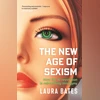
The New Age of Sexism: Laura Bates' latest book exposes online misogyny

Feminist activist Laura Bates turns her investigative lens on the insidious spread of online misogyny - now assuming new virtual avatars, yet still rooted in age-old patriarchal violence

The New Age of Sexism: How the AI Revolution is Reinventing Misogyny
Neha Bhatt
5 min read Last Updated : Jun 16 2025 | 10:14 PM IST
The New Age of Sexism: How the AI revolution is reinventing misogyny
by Laura Bates
Published by 
Simon & Schuster UK
312 pages ₹699
  As we transition into the era of artificial intelligence (AI), feminist activist and author Laura Bates describes this moment as one of “great possibilities and enormous peril” in her new book, The New Age of Sexism: How the AI Revolution is Reinventing Misogyny. What we often underestimate, she argues, is how the increasingly hostile digital climate disproportionately puts women at greater risk. Her book serves as a call to action, “before it’s too late”.

Also Read

 
What most readers know about the rapidly evolving virtual world is likely the tip of the iceberg. In The New Age of Sexism, Ms Bates exposes the disturbing realities beneath the surface, taking us to the heart of deepfake pornography, rampant abuse in the metaverse, the proliferation of cyber brothels, customised sex robots, and other warped distortions of gender dynamics. She examines how emerging technologies are infiltrating nearly every aspect of our lives — from education and entertainment to professional and intimate relationships—amplifying misogyny and introducing new threats to women’s rights and safety.
 
Ms Bates has a fair vantage point: As the founder of “Everyday Sexism”, she has documented hundreds of thousands of testimonies of women on gender inequality, discrimination and abuse, and observed how frequently harms suffered by them are ignored when they are seen as inconvenient truths that threaten the interests of powerful, wealthy white men. Globally, 38 per cent of women have had experiences of online violence and 85 per cent have witnessed digital violence against other women. Ms Bates herself has faced overwhelming abuse, including years of rape and death threats, which intensified following the publication of her 2020 book Men Who Hate Women that explored the unchecked rise of incel and misogynist networks radicalising a generation of teenage boys.
 
In her latest book, she turns her investigative lens on the insidious spread of online misogyny, now taking on new virtual avatars, but still rooted in age-old patriarchal violence. As she reveals, institutions across governments, education, law enforcement and civil society are not quite equipped to deal with these emerging forms of abuse. She places herself in harm’s way — creating her own deepfake, spending time in the metaverse, entering cyber brothels and engaging with sex robots to document the disturbing realities of digital violence firsthand. Shock, panic, desperation, fear — she finds that the physiological and psychological effects are as real and intense as though it were happening offline, mirroring experiences of millions of young girls, women, and celebrities around the world.
 
Each form of online misogyny is examined in depth over eight chapters, interwoven with Ms Bates’s real-life online exchanges. This book is not for the faint of heart. In the chapter “The New Age of Slut-Shaming”, she writes about 14-year-old girls in a quiet Spanish town being driven out of school because of deepfake pornography. In “The New Age of Street Harassment”, she uncovers how women and young girls, some as young as 10 years old, are attacked relentlessly in the metaverse. In “The New Age of Rape”, she reports on the hundreds of companies creating sex robots — some in the form of girls as young as five — including “self-lubricating” ones designed to bend to every male fantasy, including rape. They are created to be “ideal”, “submissive” companions— customised down to breast size. In “The New Age of Objectification”, Ms Bates enters a cyber brothel in Berlin, where she meets Kokeshi, a doll, prone on the bed, who can be dressed up as the customer desires, be it a nurse or a schoolgirl. In “The New Age of Domestic Abuse”, Ms Bates experiments with AI girlfriends on apps who offer customers new ways of virtual domination. Even as these technologies multiply in the blink of an eye, there are few safeguards or regulations in place to prevent the kind of harm they are capable of unleashing. Some manufacturers even claim such products are beneficial, allowing customers to enact violent fantasies in a “safe”, “non-judgemental”, “legal” way.
 
While Ms Bates presents arguments and material that are frequently compelling, original and valuable, the book falters due to a loose narrative and a tendency to go off on tangents. She is a powerful speaker who has addressed these issues on numerous occasions, and much of the writing feels conversational. Stronger editing, and a clearer narrative nonfiction approach could have made it more cohesive and gripping. Despite its flaws, it is essential reading, particularly in bringing to light the terrifying underbelly of the virtual world and demanding accountability from tech companies and lawmakers. The current wave of AI tools perpetuates existing inequalities as they are fundamentally shaped by systemic biases designed to discriminate. It is heartening, then, to read about progressive developers who are building AI and chatbots grounded in feminist values designed to spark meaningful conversations around gender and culture. There may still be hope.
 
          
The reviewer is a Delhi-based freelance journalist who writes on policy, development, public health, gender and cultures
 

One subscription. Two world-class reads.

Already subscribed? Log in

Subscribe to read the full story →
*Subscribe to Business Standard digital and get complimentary access to The New York Times

Smart Quarterly

₹900

3 Months

₹300/Month

SAVE 25%

Smart Essential

₹2,700

1 Year

₹225/Month

SAVE 46%
*Complimentary New York Times access for the 2nd year will be given after 12 months

Super Saver

₹3,900

2 Years

₹162/Month

Subscribe

Renews automatically, cancel anytime

Here’s what’s included in our digital subscription plans

Exclusive premium stories online

  • Over 30 premium stories daily, handpicked by our editors

Complimentary Access to The New York Times

  • News, Games, Cooking, Audio, Wirecutter & The Athletic

Business Standard Epaper

  • Digital replica of our daily newspaper — with options to read, save, and share

Curated Newsletters

  • Insights on markets, finance, politics, tech, and more delivered to your inbox

Market Analysis & Investment Insights

  • In-depth market analysis & insights with access to The Smart Investor

Archives

  • Repository of articles and publications dating back to 1997

Ad-free Reading

  • Uninterrupted reading experience with no advertisements

Seamless Access Across All Devices

  • Access Business Standard across devices — mobile, tablet, or PC, via web or app

Topics :BOOK REVIEWbooksBook readingFeminism

Next Story