Children of Radium: 'Digging for Trauma' in Nazi Germany's History

In the course of his research, Dunthorne makes multiple visits to Germany and tries to retrace and recreate his great-grandfather's life
Book review
Sneha Pathak
4 min read Last Updated : Jul 25 2025 | 11:40 PM IST
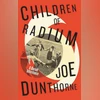
Children of Radium: A Buried Inheritance
by Joe Dunthorne
Published by Hamish Hamilton
220 pages ₹1,199 
When Joe Dunthorne’s mother gave him a ring for his wedding, she told him that the ring had “escaped the Nazis in 1935”.  With a history like that, it isn’t surprising that Dunthorne, whose debut novel Submarine was adapted into a film, decided to dig deeper into his family’s history and write about the life of his grandmother, who had fled Germany with her parents and siblings in 1935. The only problem? His grandmother’s unwillingness to talk to him because she felt he wasn’t ready. When Dunthorne decided to look into his grandmother’s “family archive” after her death, he found that the heaviest document in the collection was the memoir of Siegfried Merzbacher, his great-grandfather, running to 2,000 pages. When he started reading the document, he realised his point of focus wasn’t going to be his grandmother but her father. 
The reason: Merzbacher’s role in World War II, primarily in the Nazi regime’s chemical warfare campaign. As Dunthorne read and researched more, he realised that his great-grandfather was more than the image that had been passed down through family history — a Jewish refugee who had invented radioactive toothpaste that became all the rage in Germany. Before he immigrated to Turkey with his family, Merzbacher’s expertise had also been used in developing new chemical weapons, and he was made the director of the facility dedicated to researching them. This unexpected fact about his great-grandfather is central to Children of Radium, which becomes a detailed exploration not just of Merzbacher’s past as Dunthorne travels to the places such as Ammendorf, Berlin, Ankara, and Dersim (among others) hoping to learn more about Merzbacher and the impact of his work, but also an exploration of the complex and complicated family histories of which we are all a part, with our inheritance of closely intertwined fiction and truth from the past. 
In the course of his research, Dunthorne makes multiple visits to Germany and tries to retrace and recreate his great-grandfather’s life and the things that might have made him take the decisions that he did. His research yields many surprises, one of them being the fact that the family’s migration to Turkey and Merzbacher’s job there was fully funded by Auer, the German company for which he had been working. Then there’s also the fact that by acting as a bridge between Turkey and the Germans, he might have played a role — however small — in a mass genocide in Turkey of Armenians, which still struggles to find a place in the country’s official history. Dunthorne gives his readers a full portrait of the man his great-grandfather was, using not just his own travels and Merzbacher’s tome of a memoir, but also the notes from Merzbacher’s stay in a psychiatric ward in 1957, where he had checked in voluntarily. Towards the end, we also meet Merzba­cher’s sister Elisabeth, whose face is on one of the “forgotten but ground-breaking women of Munich” posters in the city. 
And right before it ends, the book comes full circle to his grandmother. 
 The tone of the memoir is inviting and a vein of wry humour runs throughout — whether it’s his grandmother’s description of his questions as “the tone of someone digging for trauma” or his self-awareness in accepting German citizenship for himself and his children, which would mean “turning my son German during his school lunch hour, my daughter waking German from her nap”. These flashes of humour add a light touch to a book that deals with a tragic period in history. What also works is Dunthorne’s acceptance of his great-grandfather’s willing or unwilling actions, and his capacity to accept Merzbacher with all his flaws and qualities. 
 There is no closure, no conclusive answers for Dunthorne or the reader. But what elevates Children of Radium is its readiness to be more than a biography, and to explore the stories we invent for ourselves and for others to make life more bearable. It can be read as a meditation on how family histories can sometimes turn into merely stories with less fact and more fiction. It also raises questions about the nature of memory and myth-making along with the presentness of history — whether in the impact of radioactive waste from a factory in operation during the war polluting Ammendorf today or in the peeling back of layers of family history to shine a light on the buried truths and unlearning what had, hitherto, been considered true.
 
The reviewer is an independent writer and translator

One subscription. Two world-class reads.

Already subscribed? Log in

Subscribe to read the full story →
*Subscribe to Business Standard digital and get complimentary access to The New York Times

Smart Quarterly

₹900

3 Months

₹300/Month

SAVE 25%

Smart Essential

₹2,700

1 Year

₹225/Month

SAVE 46%
*Complimentary New York Times access for the 2nd year will be given after 12 months

Super Saver

₹3,900

2 Years

₹162/Month

Subscribe

Renews automatically, cancel anytime

Here’s what’s included in our digital subscription plans

Exclusive premium stories online

  • Over 30 premium stories daily, handpicked by our editors

Complimentary Access to The New York Times

  • News, Games, Cooking, Audio, Wirecutter & The Athletic

Business Standard Epaper

  • Digital replica of our daily newspaper — with options to read, save, and share

Curated Newsletters

  • Insights on markets, finance, politics, tech, and more delivered to your inbox

Market Analysis & Investment Insights

  • In-depth market analysis & insights with access to The Smart Investor

Archives

  • Repository of articles and publications dating back to 1997

Ad-free Reading

  • Uninterrupted reading experience with no advertisements

Seamless Access Across All Devices

  • Access Business Standard across devices — mobile, tablet, or PC, via web or app

Topics :Book ReviewsBookWorld War 2Germany

Next Story



