The Mission: Tim Weiner's book explains how the CIA lost its way
Throughout The Mission, Weiner hammers on an agency that seems to be repeatedly blinded by its sense of American supremacy
NYT By Scott Anderson
THE MISSION: CIA in the 21st Century
by Tim Weiner
Published by Mariner
452 pages $35
On June 21, President Trump took to the airwaves to announce that his secret directive for the bombing of Iran’s nuclear facilities had just been carried out. “Tonight,” he proclaimed, “I can report to the world that the strikes were a spectacular military success,” with those facilities “completely and totally obliterated.”
Trump’s triumphalist tone was swiftly undercut by a preliminary Defense Intelligence Agency (DIA) analysis that found the airstrikes were likely to set back Iran’s nuclear capabilities by a mere few months. The furious president not only doubled down on his “obliterated” claim but insisted that further analysis would confirm it. Sure enough, his Central Intelligence Agency (CIA) director, John Ratcliffe, soon scurried forward to cast doubt on the DIA’s assessment and to insist that “new intelligence” from an unidentified source confirmed the sites had been “severely damaged,” not quite Trump’s adverb of choice, but close.
Nothing on the ground is any clearer now, but to many observers one thing is: These events served as yet another example of the rank politicisation of America’s pre-eminent intelligence agency. As Tim Weiner demonstrates in The Mission, this trend is likely only to accelerate with Trump in the White House.
Both as a one-time reporter for The New York Times and as a book author, Weiner has made tracking the fluctuating fortunes of the American intelligence community his life’s work. His masterly “Legacy of Ashes,” detailing the CIA’s first half-century, won a National Book Award in 2007. The Mission picks up where that book left off, narrating the agency’s history beyond the fall of communism. It is exhaustive and prodigiously researched, but also curiously ungainly.
The story begins in the 1990s. Grasping for a new mission in the wake of the Cold War, the CIA played a supporting role in the war on drugs, and then, after the 9/11 attacks, the war on terror. Agents hunted for the Al Qaeda leader Osama bin Laden in Afghanistan and tortured high-value prisoners in hopes of gaining information on future attacks. Much of the testimony, Weiner writes, was gathered by a quickly raised army of often inexperienced interrogators. At the same time, Weiner notes, intelligence officers often felt their intelligence was beside the point. As one former CIA Iraq operations chief insists, “These guys would have gone to war if Saddam had a rubber band and a paper clip.”
Throughout The Mission, Weiner hammers on an agency that seems to be repeatedly blinded by its sense of American supremacy. In the past decade and a half, the CIA has been caught off guard again and again, including in China, where the country’s intelligence services apparently excel at rooting out and killing American assets. The agency was also back-footed by the onset of the Arab Spring uprisings in 2010, Weiner writes, because US spies depended on the accuracy of information coming from aging counterparts within the dictatorial regimes that were about to crumble in the unrest.
Weiner saves his greatest scorn, however, for the first Trump administration, detailing both the vast web of contacts between his campaign staff and Russian intelligence officials as well as Trump’s subsequent efforts to bring the CIA to heel, even as he leaned on his intelligence advisers to vet his rash proposals. “How would we do,” Trump’s first CIA director, Mike Pompeo, later recalled the president musing, “if we went to war with Mexico?”
There is something simultaneously illuminating and saddening in contemplating the course the CIA has travelled during the past quarter-century. In this regard, one episode Weiner recounts stands out. In 2007, the CIA gathered compelling evidence that Syria, no friend of the US, was well on its way to building a nuclear weapon. The news set off a spirited debate within the Bush administration over whether it should launch a pre-emptive strike to eliminate the site. The idea was vehemently opposed by one of Bush’s closest advisers — “We don’t do Pearl Harbors” — and the bombing scheme was shelved (though it was taken over by a country willing to do the job: Israel).
Compare that with Trump’s “Pearl Harbor” assault on Iran’s nuclear facilities even though the CIA and almost every other Western intelligence agency had concluded that Iran was not developing a nuclear weapon. The attack starkly underscored just how shamelessly the American intelligence community has already succumbed to Trump’s will. In this regard, Weiner’s warnings about the peril facing both the CIA and the US seem prophetic.
The reviewer is a contributing writer for The New York Times Magazine

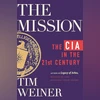 "The Mission: Tim Weiner's book explains how the CIA lost its way")


 Connect with us on WhatsApp