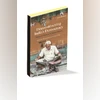
Deconstructing India’s Democracy: Essays in Honour of James Manor
by Rob Jenkins and Louise Tillin
Published by Orient BlackSwan
364 pages ₹1,640
In contemporary politics, the word “democracy” has become heavily weaponised — and invoked by both ends of the ideological spectrum for their own purposes. In the heat of these debates, it becomes easy to lose sight of how democracy was initially conceived, understood and practised.
Deconstructing India’s Democracy examines India’s political and socio-economic landscape through prominent scholar James Manor’s analysis on how democratic institutions adapt in complex political environments. It refocuses attention on Dr Manor’s reflections on political decay, the resilience of Indian democracy, and the prospects for political renewal.
The book acknowledges that India, like leading democracies globally, “faces unprecedented stresses from economic challenges wrought by premature deindustrialisation and political tensions created by majoritarianism.” The editors, both academics, draw on his body of influential work as a political scientist engaging with Indian politics over 50 years. Probing India’s democracy through a historical and contemporary lens, the book analyses intersections of leadership and power, politics and identity, democracy and elections, policymaking and governance.
Though alarmism about democratic conditions is nothing new, the editors say, it’s important for political scientists to examine institutional degradation “as a result of conscious action”. “This allows us to diagnose the country’s democratic deficits while also highlighting signs of a possible regeneration.”
To that end, the book presents a deep study of these ideas through essays by leading scholars such as Zoya Hasan, John Harriss, Suhas Palshikar, among others, who build on Dr Manor’s arguments and apply them across a range of contexts.
“Political Leadership”, the opening chapter by Diego Maiorano, focuses on the impact of certain political leaders and the centralisation of power, which Dr Manor believes is a primary cause of political decay. He also examines how progressive political leaders can be a force for good. He questions Dr Manor’s optimism on Indian democracy’s ability to regenerate itself, saying that “processes of centralisation leave behind permanent scars that make the next phase of centralisation more likely, even inevitable, and possibly more severe.” Crucially, this chapter notes that Indian voters are increasingly drawn to great centralisers, leaving the door open for polarisation of masses for their own purposes.
In “The BJP’s Hegemony and Its Limitations”, another essay in the book, Christophe Jaffrelot elaborates on Dr Manor’s analysis of India sliding into a state of “competitive authoritarianism”, particularly since 2014. Dr Jaffrelot prefers to call it “electoral authoritarianism”, with a great personalisation of power. He observes that while Dr Manor attributes BJP’s domination to Narendra Modi’s charisma, demagoguery and the Sangh Parivar’s strategy of polarisation, it is a path that may not be sustainable in the long run.
Deconstructing “Caste in the lives of India’s Political Elite,” Surinder S Jodhka offers an insightful view on how leaders such as Gandhi, Nehru, Lalu Prasad Yadav and B R Ambedkar or Kanshi Ram engaged with caste politics. He argues that the shift from ideology-based politics, which sought democratisation through caste annihilation to a politics of power sharing among caste communities transformed electoral politics, enabling political leaders to form viable political alliances.
Indeed, electoral democracy in India has deepened with a larger voter turnout, a positive sign for any democracy. In an illustrative chapter laden with data, Sanjay Kumar of Lokniti lays out what has led to a participatory upsurge in elections, particularly among women. This chapter works as a stand-alone essay as well, noting that in the current “personalistic” and ideology-based form of politics, voters tend to decide who to vote for even before campaigning begins. Studying democratic decentralisation through the Karnataka model, particularly in the 1980s, was central to Dr Manor’s work, and in its concluding chapters, this volume investigates the fault-lines of the panchayat institutions. The rise and fall of the United Progressive Alliance is also dissected. Dr Manor’s time at Mysuru University serves as a springboard for Manisha Priyam to probe the politics of educational reform in princely Mysore, a worthy addition.
Questions of majoritarianism, authoritarianism, and liberalism understandably loom large over the book. The strength of a book like this lies in the fact that such questions can be addressed in a variety of ways — ways as diverse as India itself. One particularly valuable one is asked by Niraja Gopal Jayal as she explores the identity crisis of Indian liberalism: Would liberalism have remained a forgotten value had it not been for the purposeful crackdown on individual liberties and civil society? If the vocabularies of recent protests are any indication, she notes, liberal principles may well have taken root in democratic soil through a language forged in resistance and phrased in concepts like rights, freedom and justice — hinting at new possibilities for a different form of liberalism.
The reviewer is a Delhi-based freelance journalist who writes on policy, development, public health, gender and culture