Deepali Gupta traces the India story through its mobile telephony tales

To understand today's telecom business, one must trace the evolution of the entrepreneurs who shaped it
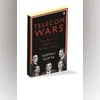
Telecom Wars: The Race to Capture a Billion Voices
Nivedita Mookerji New Delhi
4 min read Last Updated : May 22 2025 | 11:24 PM IST
Telecom Wars: The Race to Capture a Billion Voices
by Deepali Gupta
Penguin Random House India
459 pages ₹1,299
 
The telecom sector is buzzing again, making this book timely and relevant. There’s action both on the terrestrial telephony front and the satellite side of the business. In a surprise move, Sunil Mittal-led Bharti Airtel Group recently approached the Department of Telecommunications (DoT) seeking conversion of its AGR dues into government equity under the package offered for stressed telecom companies (telcos) in 2021. Vodafone Idea is a recipient of that package and Airtel clarified in its post-earnings call that it was exploring a level playing field. Both these telcos, along with Tata Teleservices, also moved the Supreme Court seeking relief on their dues linked to adjusted gross revenue (AGR), and the top court rejected the plea.
 
Now, satcom broadband is aiming to go where terrestrial could never reach with internet connections — the remotest corners of the country. Airtel and Reliance Jio are gearing up to step up their play in the skies as Elon Musk’s Starlink and Jeff Bezos’ Kuiper join the fray. The method of spectrum allocation — auction versus administered distribution — has already seen fierce debate between terrestrial and satellite players, and is not expected to lose steam anytime soon.
 
Against this setting, Telecom Wars: The Race to Capture A Billion Voices provides an understanding of the past that a young reader would value. To understand Sunil Mittal’s current way of doing business, it’s essential to know how this Ludhiana boy stepped onto the world stage in search of entrepreneurial ideas —a journey that Deepali Gupta competently captures, from push-button phones to answering machines, pagers, and eventually mobile telephony. Sometime in the early 1990s, Mr Mittal relocated to London “to learn a new trade: mobile telephony. Here he splurged on specialists to … make a bet of a lifetime,’’ Ms Gupta writes. As the group gets ready to launch satellite broadband service in India, Mr Mittal’s back story as an entrepreneur helps connect the dots.  
 
Similarly, to understand what Reliance Jio’s deep discounting model is all about, it’s important to understand how the Ambanis approached the telecom business — this book has attempted to trace back the origins well. Among the other telecom journeys highlighted here are those of Ratan Tata, Kumar Mangalam Birla, Mahendra Nahata and C Sivasankaran. Then there are foreign telcos such as Vodafone, Hutch and Singtel, which are woven into the narrative.
 
The book is divided into nine parts but is not in a chronological order. The focus is on telling the telecom story of India through the strategies and plans of the protagonists, who were mostly reacting to the swiftly changing policies, regulations and technologies. For the reader, the story may appear like a tapestry or a chess board or perhaps a snakes and ladders game, depending on who one considers the centrepiece. Ms Gupta has put together the complex story of Indian telecom through decades by speaking to many sources, conducting interviews with business honchos and policymakers as well as using reports and documents available in the public domain. Readers could, however, have been better guided with specific dates of events and developments, especially as the book is not in a chronological order.
 
The book starts, though, with a date —1982 — when telecom minister C M Stephen was defending “the failings of India’s only phone service provider with angst and a hint of indignation…’’ It sets the stage for the state of telecom at that point and quickly connects with one of the protagonists—Sunil Bharti Mittal. “Mittal had even become ensnared in the crosshairs of India’s big businesses that were prospering under the ‘licence raj’, which was at least in part responsible for the deplorable state of communications in the country.’’ This deplorable state is elaborated —if the paperwork for a phone line could be completed for a new-born baby, there was a chance of the landline connection being received by her 18th birthday.
 
From then to near universal mobile telephony, Telecom Wars is a delightful recounting of how India has changed. The book touches upon many turning points — the 2G scam, Vodafone’s retrospective tax woes, the split of so many business partnerships, including those between the Tatas and Birlas, the launch of Jio, the impact of Ambani brothers’ feud, the many auction wars and more.
 
Business journalist Deepali Gupta’s previous book published in 2019 — Tata vs Mistry: The Inside Story — was a page turner. This one is a good reference for anything to do with telecom, even as it brings alive some of the landmark developments and stakeholders through the pages of history.

One subscription. Two world-class reads.

Already subscribed? Log in

Subscribe to read the full story →
*Subscribe to Business Standard digital and get complimentary access to The New York Times

Smart Quarterly

₹900

3 Months

₹300/Month

SAVE 25%

Smart Essential

₹2,700

1 Year

₹225/Month

SAVE 46%
*Complimentary New York Times access for the 2nd year will be given after 12 months

Super Saver

₹3,900

2 Years

₹162/Month

Subscribe

Renews automatically, cancel anytime

Here’s what’s included in our digital subscription plans

Exclusive premium stories online

  • Over 30 premium stories daily, handpicked by our editors

Complimentary Access to The New York Times

  • News, Games, Cooking, Audio, Wirecutter & The Athletic

Business Standard Epaper

  • Digital replica of our daily newspaper — with options to read, save, and share

Curated Newsletters

  • Insights on markets, finance, politics, tech, and more delivered to your inbox

Market Analysis & Investment Insights

  • In-depth market analysis & insights with access to The Smart Investor

Archives

  • Repository of articles and publications dating back to 1997

Ad-free Reading

  • Uninterrupted reading experience with no advertisements

Seamless Access Across All Devices

  • Access Business Standard across devices — mobile, tablet, or PC, via web or app

Topics :telecom sectorSupreme CourtDoTBharti AirtelBOOK REVIEWBook readingBS Reads

Next Story



