HONEST JOHN: A Life of John Matthai
John Matthai had many unique distinctions. He was India’s only post-independence finance minister who had also held that responsibility in the interim government, formed before the country gained freedom. As finance member in Viceroy Wavell’s Executive Council, Matthai took some important decisions such as abolishing the notorious salt tax, levying an export duty on cotton and removing price controls on jute and jute goods.
But in less than two months, he had to make way for Liaquat Ali Khan of the Muslim League, which belatedly decided to join the interim government. Matthai, an academic, lawyer and a senior executive in Tata Sons before becoming a minister, was instead asked to take charge of the industry and supplies department. After independence, Matthai was made railway minister, an onerous responsibility in those post-Partition days when millions of refugees had to be transported across the divided country.
Matthai’s other unique distinction was his unconventional approach to budget presentation. He is India’s only railway minister to deliver a budget speech without a prepared text. Again, in 1950, he chose to deliver his Union Budget speech extempore, much to the consternation of his officers in the finance ministry.
The media was even more worried. No copies of the speech could be distributed after the budget’s presentation. The budget speech was thus covered by only those journalists who were present in Parliament and took notes.
That was Matthai’s second and last budget before he quit the government over the decision to set up the Planning Commission. Remarkably, he did not let his differences with Prime Minister Jawaharlal Nehru hinder his Budget announcements — his Budget speech included a mention of the government’s decision to set up the Commission.
If Matthai was chosen by the Congress to be the finance member in Viceroy Wavell’s Executive Council, why did he not get the finance portfolio in Nehru’s first Cabinet after independence? It appears that as a member of the Executive Council, Matthai had endorsed proposals to levy a super tax on profits earned by companies and investigate tax evaders. But Vallabhbhai Patel vociferously opposed these proposals, believing that the action was essentially aimed at business houses from Gujarat.
In the process, the distinction of becoming post-independence India’s first finance minister was earned by R K Shanmukham Chetty. Ironically, Chetty did not last long; he, too, fell victim to a technical error with regard to one of those controversial moves — the proposal to launch investigation into income-tax evasion by companies. There was, however, some poetic justice in Matthai’s return as finance minister after Chetty quit the government.
Bakhtiar K Dadabhoy has done an admirable job in recreating the social, economic and political backdrop in which India’s second finance minister functioned. Mr Dadabhoy is a reputed biographer of eminent personalities including J R D Tata, Zubin Mehta, and Homi J Bhabha.
Matthai also held senior positions in the Tata group and headed the State Bank of India, the National Council of Applied Economic Research and the Directorate General of Commercial Intelligence and Statistics, in addition to chairing the first taxation enquiry committee set up after independence. It is significant that his differences with Nehru did not stop the government from appointing him as the head of a state-owned enterprise or steering a tax committee. Equally notable was the fact that Matthai did not hesitate to take up these assignments even though he was a former finance minister. More intriguing was Matthai’s decision to return to the Tatas and it appears from Mr Dadabhoy’s account that no questions of conflict of interest were raised.
Similarly, Mr Dadabhoy shows with great detail the manner in which Matthai handled the devaluation issue in the early years after independence. Could he have handled it more competently? Once again, the biographer presents all sides of the story but refrains from making any judgement on Matthai’s conduct.
In the Epilogue, however, Mr Dadabhoy chooses to dwell on Matthai’s children and their achievements. In a biography of John Matthai, the Epilogue should have been on his larger legacy in public policymaking.

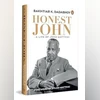 "John Matthai: The values of service revisited in fresh perspective")










 Connect with us on WhatsApp